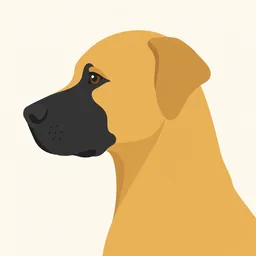
 Black Mouth Cur

Owners ask in plain words why their dog freezes and stiffens when someone walks past the bowl, and how to make it stop. The immediate goal is to prevent conflict and make an approach predict good things.
That tense, silent freeze is a driven, resource-aware dog being clear about a worry. Rewarded distance and predictable exchanges reduce the worry. A dog who learns that people near the food mean good news can relax. That ease spreads into the rest of life together.
Below, you'll find the management steps to start today and the two core skills, followed by case files for tight apartment living, households with toddlers, a second dog under the same roof, and a household with long weekday absences. We finish with the signs that trust is growing and the signs that call for a professional.
Manage Black Mouth Cur Guarding of Food and Bones
Management means arranging the house so the guarding has no reason to appear. It comes before any training because every rehearsed freeze or growl makes the next one easier. Calm meals are the foundation for everything else in this article.
Set Up the Feeding Spot
Feed in one quiet place that nobody has to walk past, such as a gated corner or a room with the door closed. Put the bowl down, leave, and pick it up only after the dog has walked away on their own.
Keep your hands out of the dish and skip the hovering. Reaching in while a dog eats, or repeatedly lifting food away, can build resource guarding that was not there before.
Give Bones Only in Safe Spots
Offer bones and long-lasting chews in a crate or gated room, with the dog alone. Collect leftovers after the dog has left for water or a walk, and drop a tasty treat where the chew lay so the pickup pays.
Save the best chews for calm moments, like the evening wind-down after work. A Cur who is still wound up from the day tends to hold a prized item harder.
Learn the Earliest Signals
The body goes still and stiff, the head lowers over the food, chewing slows, and the eyes track your feet. A yawn, or a look away that shows the whites of the eyes, is also among the early signs of discomfort.
At the first of these, stop walking toward the bowl, turn sideways, and toss a treat well away from the food. The dog can then leave the bowl by choice and come out ahead.
Trade Games and Calm Approach for Guarding Food
Two skills carry every household below. A trade-up teaches that giving something up brings something better, and a calm approach teaches that a person walking toward the dog predicts a treat.
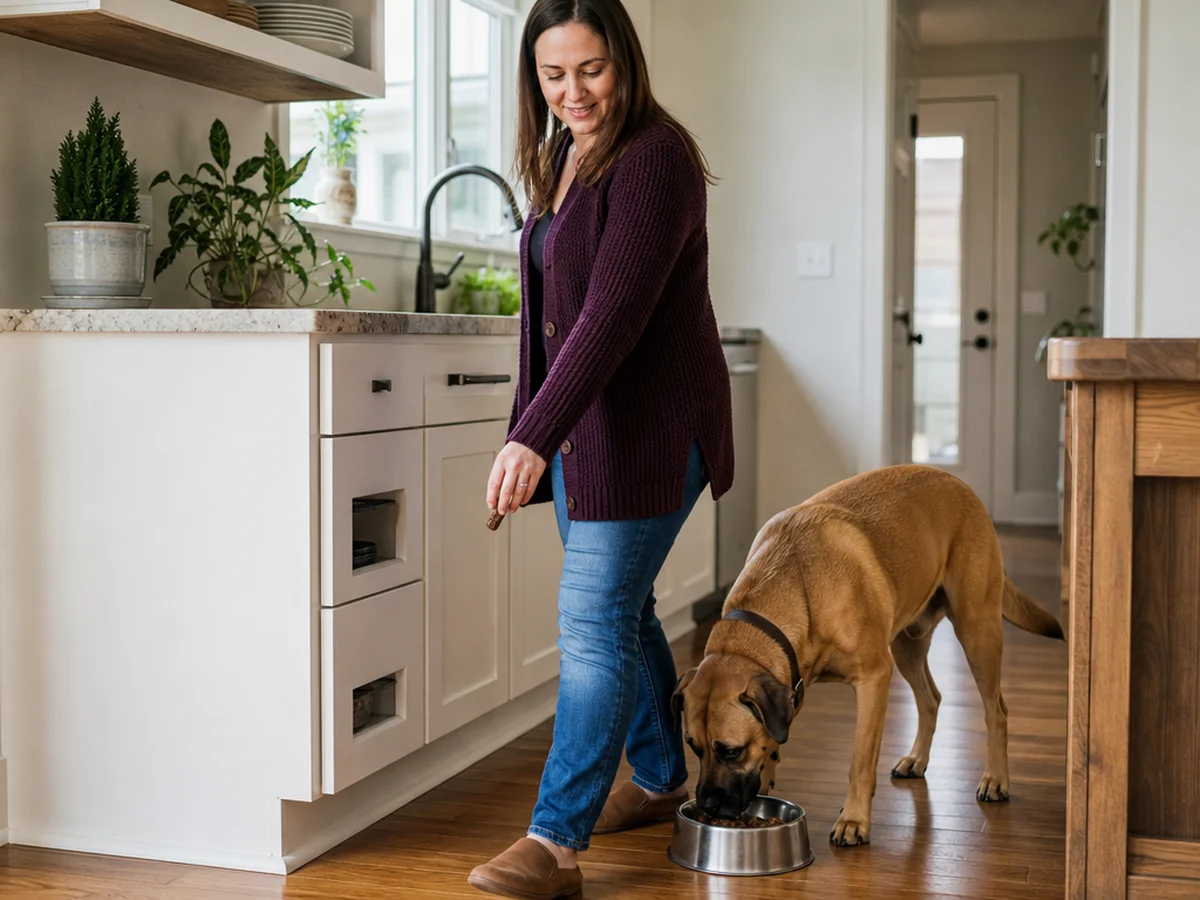
Think of a waiter: one who clears your plate and returns with dessert becomes a welcome sight. One who only takes the plate becomes someone you watch.
The Trade-Up Swap
Start with a low-value toy, never a bone. Hold a treat the dog likes better right at their nose, say your marker word (such as yes) as they take it, and lift the toy while they eat. Then hand the toy back, since a swap that returns the item is not a loss.
Over several days, move to items the dog values more, staying below the point where their body tightens. Teach a drop cue through tug by pausing, showing a treat, and marking the instant the toy is released. If teeth touch skin, pause play briefly for 10 to 20 seconds, then begin again.
A Calm Approach With Tossed Treats
Run this routine yourself, one adult at a time. Repeat each step until the dog looks relaxed, and go back a step if their body stiffens.
- Begin with a low-value meal, standing far enough off that the dog keeps eating loosely.
- Take one step toward the dog, toss a high-value treat near them rather than into the bowl, and step back out.
- Repeat until the dog glances up with a soft face the moment you move, which shows your approach now predicts food.
- Over several days, close the distance in small steps, then pause beside the bowl and drop the treat into it as you pass.
- Only then try a more valuable food or a chew, starting again from a distance.
Keeping the Dog's Choice Intact
Every step ends with the food still in the dog's possession and the dog free to walk away. A breed known for tenacity and courage holds what they value firmly, so pressure tends to tighten the hold while choice lets it soften.
Many Curs also size up a situation by watching your reaction. Keep your face and shoulders relaxed, and end every practice round while the dog still wants more.
Small Apartments and Black Mouth Cur Food Guarding
In a small apartment the bowl often sits in the kitchen, the room everyone crosses to reach the fridge, the sink or the balcony door. Each pass is a rehearsal, so a guarding Cur may freeze many times a day without anyone noticing, because the walking is routine.
Build a Dedicated Feeding Zone
Many owners find it works best to pick the corner farthest from the household's usual routes, mark it with a mat, and make one rule that nobody walks through that spot during meals. If the layout offers no such corner, feed in a bedroom or bathroom with the door closed.
Rework Your Own Routes
Where a tight corner forces you to pass, curve wide, stay on the far side of the room when you can, and toss a treat on your way by. Practice those passes with the tossed-treat routine, so the walkway becomes a place where good things happen.
Bones follow the same logic. Give chews on a mat in a closed bedroom, away from the front door, because a Cur who goes wild at deliveries or hallway noise is already on alert and a prized chew adds fuel. Settle first, chew second, and collect leftovers once the dog has wandered off.
Do Kids Change Guarding Food and Bones?
They do, and the difference is mostly speed and height. Small children move suddenly, drop crumbs and put their faces at the dog's head level, which is exactly where a guarding dog is most worried. The adult plan stays the same, with firmer barriers around it.
Every close approach by a child is a test the dog did not ask to take. A dog tested over and over learns that a growl is not enough, and the dog pays for that lesson. Protecting the dog from being tested protects the child too, and the rules are simple:
- Children never approach, reach toward or hug a dog who is eating or chewing, however gentle the dog is on other days.
- Serve meals and chews behind a closed door or baby gate, and keep children on the other side until the dog has finished eating and walked away.
- Snacks are eaten at the table, so dropped food does not become treasure in the middle of the living room.
- Every adult and every visiting child follows the same rules, so the dog is never surprised by someone who does not know the plan.
Schedule chew time instead of leaving items out. Offer a chew when the kids are at school, napping or busy in another room, and collect it while they are still elsewhere. Keep the trade games and approach routine as adult jobs, and let children enjoy safe games such as tug with a toy, well away from food.
Black Mouth Cur Guarding Food and Bones in a Two-Dog Home
Plenty of Curs adore people. Some have little interest in other dogs, and some resent a second dog in the home.
A people-loving Cur does not guarantee a dog-loving one, so the plan starts from the assumption that bowls and chews are trouble spots. For more on this range of personalities, see our look at Black Mouth Cur temperament.
Give each dog a separate feeding station, in different rooms or crates. Keep doors closed until both bowls are empty and picked up.
Stagger chews the same way: one dog chews in one space while the other is elsewhere, and everything is collected before they meet again. Sweep up crumbs, because leftovers are where fights over food tend to begin.
If the Cur stiffens when the other dog walks by, stay calm, call them away by name, and toss a treat in the opposite direction. That calm interrupt is mild and rewarding, and it gives both dogs a way out. Practice the tossed-treat routine with the Cur alone first, with the other dog out of the room.
Watch the relationship beyond food, too. Some owners report Curs who finish fights that other dogs start, or hostility that grew out of play over time. Tension like that goes beyond a bowl problem, so management and professional advice come first.
What About Guarding Food and Bones When Home Alone?
When you work all day, a guarded item can become the dog's main company, and nobody is there to notice trouble. The goal for an empty house is to leave the dog with nothing worth guarding and something worth doing. Many Curs also grow more vocal and territorial at home, which is one more reason to keep the house calm while you are out.
Meals and Chews While You Are Out
Serve meals in a puzzle feeder or on a snuffle mat in the dog's safe spot, which suits a working-minded breed and fits the ideas in jobs for a Cur's drive. Feed at set times, before you leave and after you return, rather than leaving a bowl down all day.
Offer durable chews, sized for your dog, only when you are home to watch. Regular vet visits matter here too, since a dog who is sore or unwell can be touchier around food.
Evening Practice
Practice when you are present and the dog has had exercise. Run the trade games and approach routine at the feeding spot, then collect every chew and toy before bed, so nothing risky is left out for the next morning.
Progress Signs and Professional Help for Food Guarding
Working trust at the bowl looks quiet. The body stays loose when someone walks past, the dog keeps eating while you move through the room, and they glance up with a soft face because your steps now predict a treat. They hand over a chew in a trade, look to you for the next round, and walk away from a bone to follow you instead of carrying it off to hide.
Expect setbacks. A new, more valuable item or a stressful week can bring the freeze back, and the fix is to go back a step and make the practice easier. For other instinct-driven habits, our guide to Black Mouth Cur behavior problems covers what comes next.
Ask a qualified trainer or behavior professional to step in, and book a veterinary exam, when any of the following appears. Early help keeps the plan safe.
- A bite, or a snap or lunge that makes contact.
- Warnings that get stronger or faster even though your management is consistent.
- Guarding that spreads to furniture, rooms, people or children.
- Guarding that begins suddenly in an adult dog, which calls for a vet check first.
- Any situation where management alone cannot keep everyone safe.
A Black Mouth Cur is a loyal, intense working dog, and guarding at the bowl is usually that intensity pointed at something they value. Trust grows when every approach is good news, so keep the setup steady, add the games slowly, and move at the pace your dog's body shows is comfortable. A dog who eats on calmly while you pass, and trades happily when you ask, is showing you the relationship you were building all along.
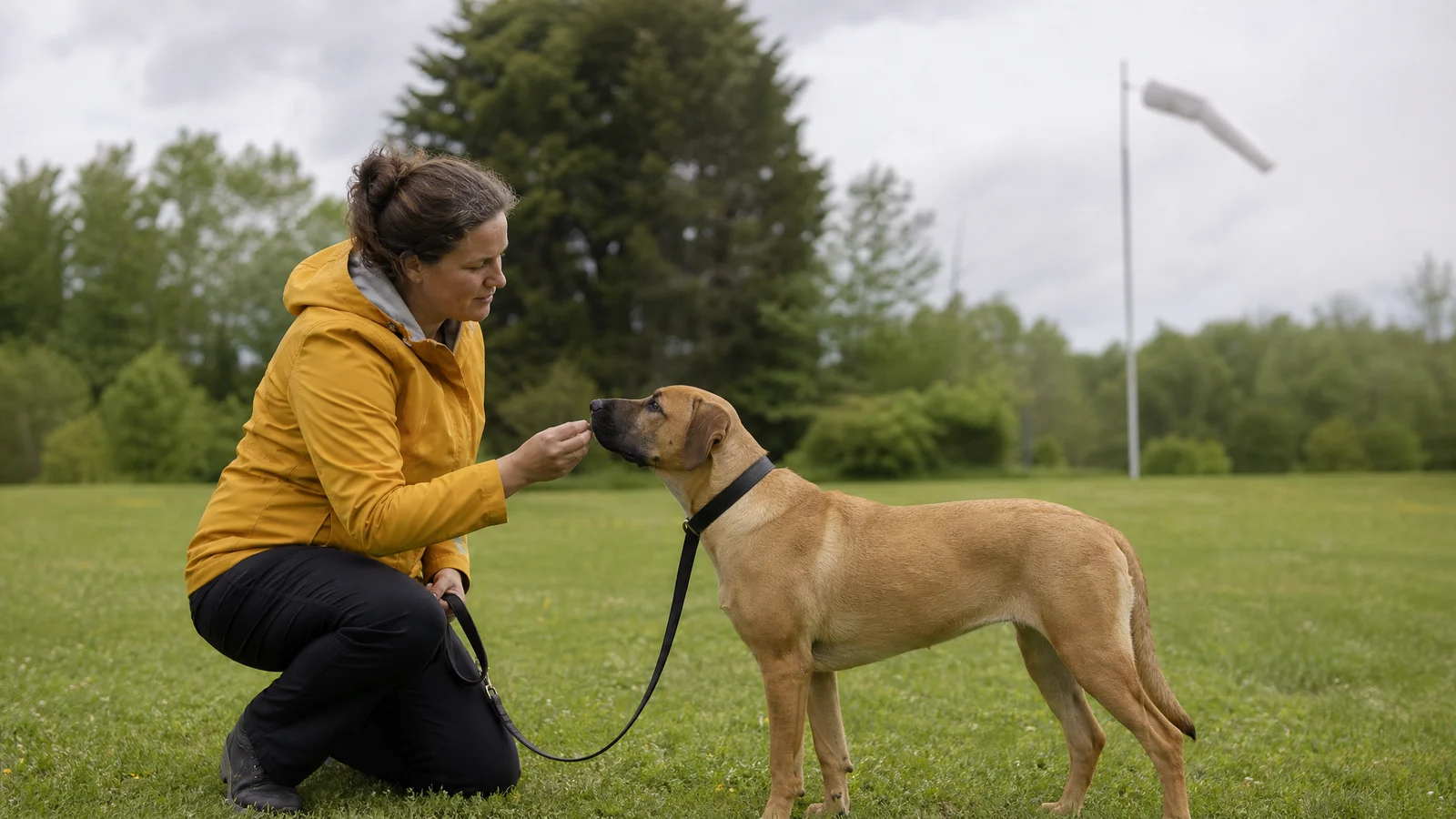 BehaviorBuilding Confidence in a Sensitive Black Mouth Cur
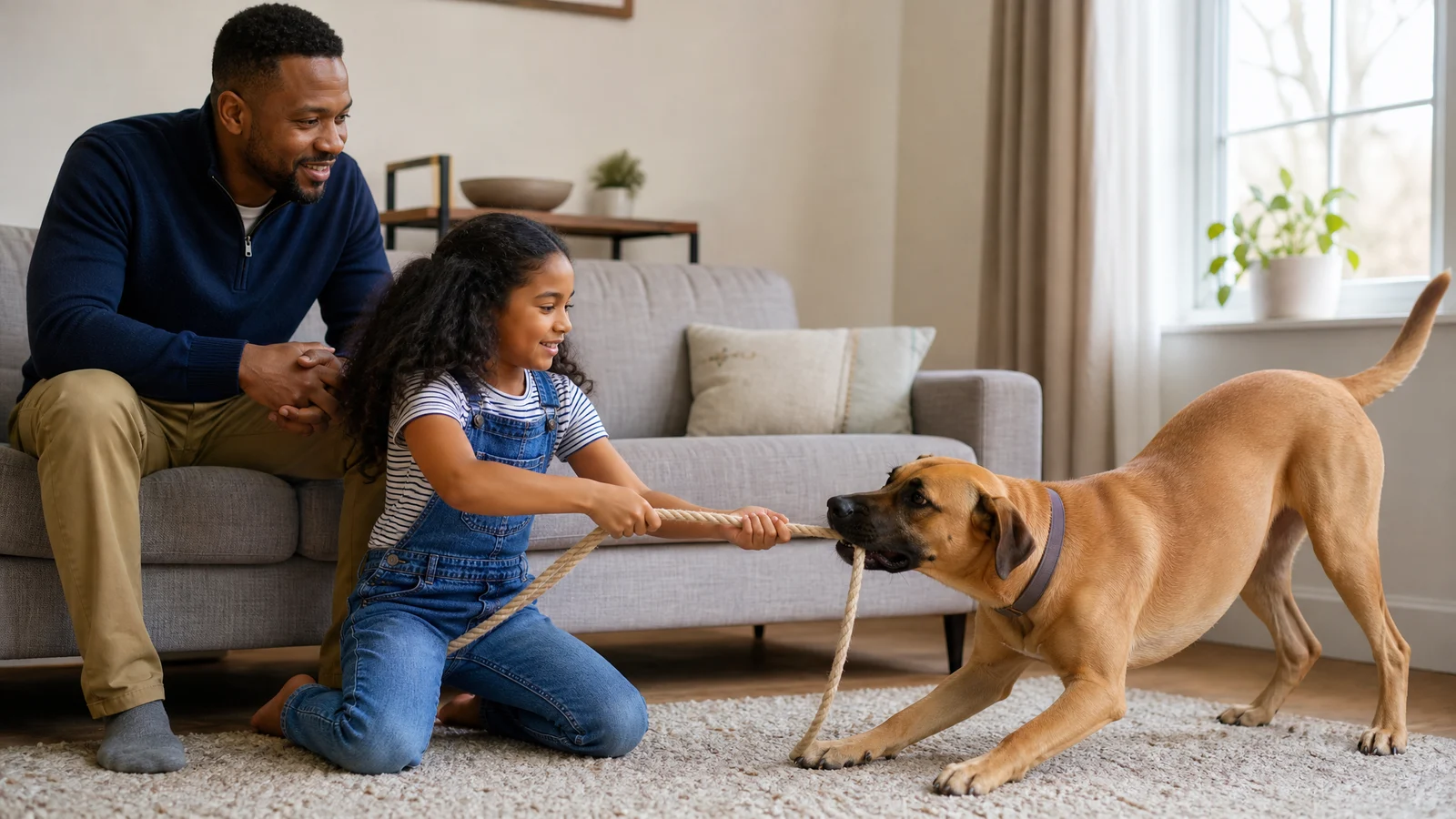 BehaviorBlack Mouth Cur: Gentle play with kids
 Training basicsTeaching a Black Mouth Cur to Come When Called