 Black Mouth Cur
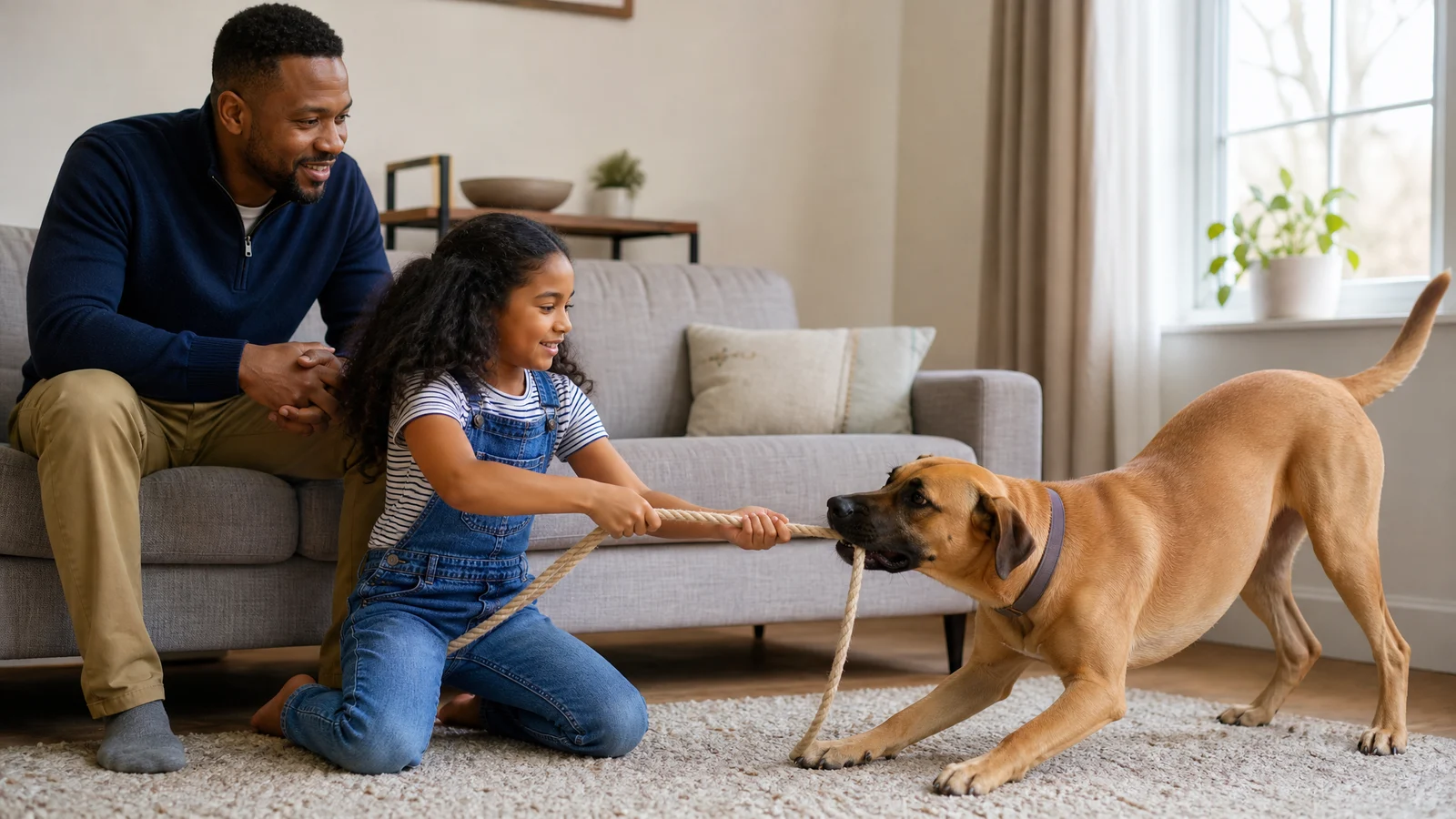
Yes, a Black Mouth Cur can learn gentle play with kids, but only when adults manage the setup first and reward calm, soft play. The reason is the breed: a strong, athletic, high-drive dog plays the way they work, with speed, full commitment and plenty of mouth.
That matters because rough habits rehearsed in puppyhood turn into adolescent strength, and children pay for the difference. Done right, the same energy makes a loyal, engaged playmate who recovers fast and checks in with you.
We have trained this breed for many years, and the plans that hold up are built around a real household. Read on for case files covering a small apartment, a home with a toddler, a house with two dogs and two kids, and a weekday spent at work, then the signs of progress and when to call for help.
Gentle Play With a Black Mouth Cur Starts With Prevention
Separate the urgent job from the slow one. Prevention is urgent: it works tonight, costs a little convenience, and stops rough games from being rehearsed. Skills training is slow, and in this breed it runs for months, because the breed standard describes a powerful, agile working dog bred for stamina, with tenacity, courage and a real appetite for work.
In play, that becomes speed, total commitment and a mouth that takes hold. Puppies explore with their teeth, and bite inhibition, which is learning to moderate bite force, matters for every dog, because a dog in pain or afraid may one day put their mouth on someone. Teaching it early with rewards protects the children and the dog.
Some Curs rumble or growl while being petted, often from puppyhood into adulthood, and owners tend to read it as affection. Learn your dog's baseline sounds and body language so you can tell happy talk from a warning.
Prevention Rules for Daily Play
These four habits cover most of the risk while the skills are still being built. Put them in place before any formal practice, and keep them afterward too.
- Supervise with your eyes on the pair for every minute that child and dog share a space, and use a second adult or a closed door when you cannot.
- Use barriers such as gates, closed doors and a leash held by an adult, so the dog never gets to practice the rough version.
- Build breaks into every game by stopping often, asking for a settle and letting the dog choose whether to restart.
- End play early, while the dog is still loose and happy and before mouthing starts, because a game that stops at its high point leaves everyone wanting the next one.
Common advice says to let the dog and kids sort it out, or to wear the dog down with roughhousing first. Both teach a mouthy dog that bodies are for grabbing. Tire the dog with walks and sniffing instead, and keep the games themselves short and structured.
Gentle Play With Your Black Mouth Cur in Small Spaces
In a small apartment with one school-age child, the problem is geometry. A medium-sized dog built for stamina has nowhere to run, the child's room opens onto the living room, and every game happens at close range. So the first rung of the practice plan trades speed for structure, using a settle cue and calm tug, with an adult running both.
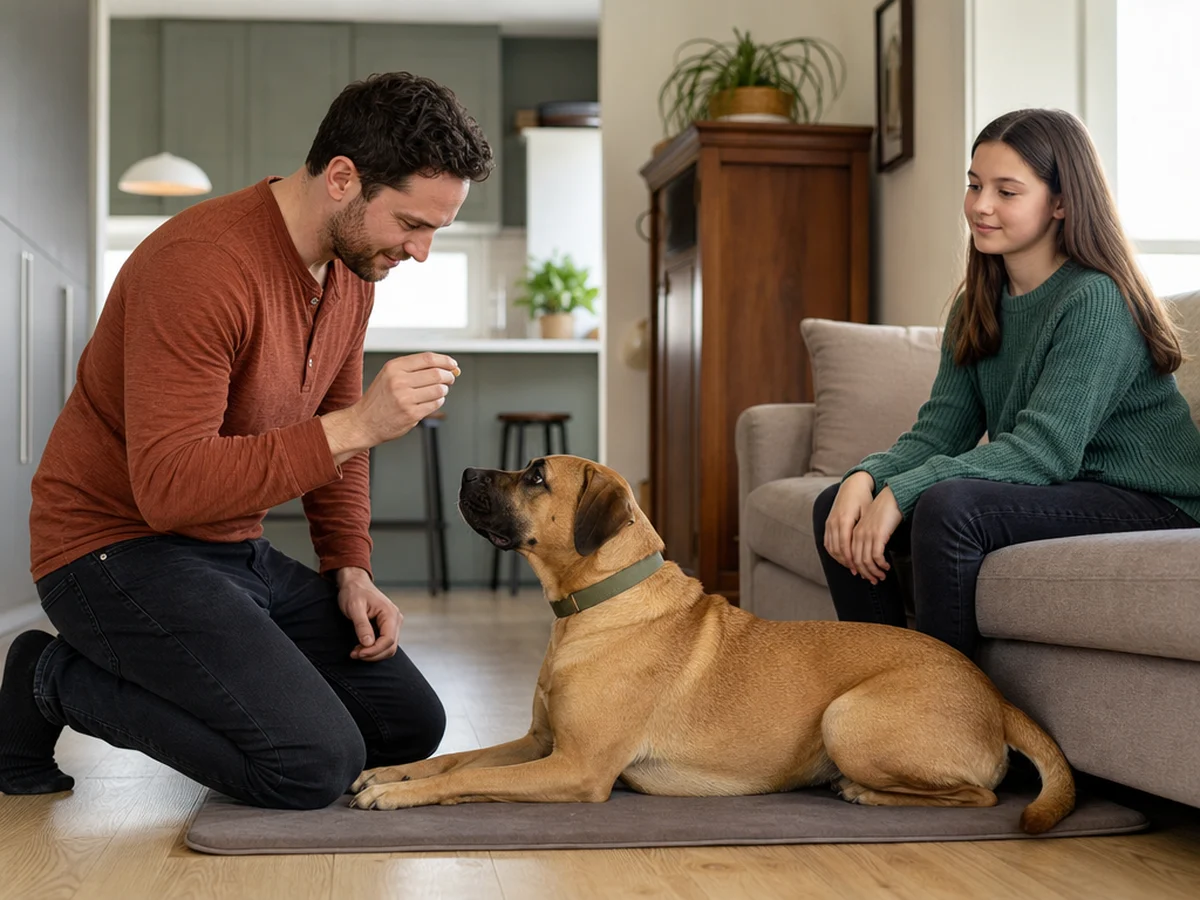
Start with a marker. In a quiet room, pair a marker with food: say the word, deliver a treat within 3 seconds, and repeat until the word predicts food. Then climb the first rung in this order.
- Teach a settle on a mat in the quietest corner, paying the dog for lying down while family life passes by, then add a second mat near where the child does homework.
- Teach a release word for a tug toy. The adult offers the toy, the dog takes it, plays a few gentle seconds, and trades it for a treat on the release word. Tug ends the instant teeth touch anything but the toy, followed by a cue to the mat.
- Only when the release is reliable, let the child hold the far end of the toy while the adult holds the leash and the child stays on one spot.
Spend Energy Before Indoor Play
Indoor space has a hidden cost. A cooped-up day stores energy that comes out as rough play, so walk the dog first and keep indoor rounds short, at a time of day when both child and dog are fresh. Recheck the layout every few months, because a growing dog and a stronger child fit the same rooms differently.
Mind the door as well. Several owners say their Cur ignores strangers in public but turns vocal at home, so a hallway knock can flip the mood mid-game. Pause the game and send the dog to the mat.
Visitors test the plan too. Ask guests to ignore the dog until the dog approaches and touches their hand, then have them give a treat.
Apartment Play for a Black Mouth Cur and Child
Small apartments change how a school-age child and a Black Mouth Cur share a day, so the first rung of the plan is built around the rooms you actually have. Here is how that first rung looks.
Pick one spot, such as the living room corner farthest from the child's bedroom door, and make it the only place tug happens. A medium-sized dog bred for stamina will turn any hallway into a racetrack, so close the other doors or gate them off before the game begins. The child sits or stands still while an adult holds the toy and runs the session.
Start with calm tug. Offer the toy, let the dog take it, and play slowly for a few seconds. Then ask for a settle on a mat, mark the moment the dog lies down, and pay with a treat. If you use a clicker, pair the marker with food first, in a quiet room, with the treat arriving within three seconds of the click.
Keep these first sessions short and end them while the dog is still relaxed. The child's job is simply to watch and, later, to hand over a treat after the adult cues the settle. Move closer only when the dog drops into the settle quickly and stays loose through several sessions in a row.
Gentle Play With a Toddler Needs Gates
A toddler cannot follow rules, and squealing, lurching and falling at dog height is hard for a working dog to ignore. So the adult does all the supervising and the gates do much of the work. Plan it as a stage that lasts months, because rushing it costs more than waiting.
Give the dog a rest zone the toddler can never enter, such as a gated corner with a bed and a chew. A tether can add a second layer, a leash clipped to a heavy anchor while an adult sits within reach, and it is never for unwatched time. A Cur who rests behind a gate is practicing the habit that makes later play safer.
Rewards run quietly in the background. Whenever the toddler is calm nearby and the dog is resting on their bed, drop a treat to the dog without a word.
Some games are off the table until the child is older and the dog's skills are solid. Keep these out of the house for now, even when the dog looks relaxed.
- Chase games, indoors or out, since a running toddler and a stamina breed make chasing the natural result.
- Wrestling, and any game in which the toddler's hands or face come near the dog's mouth.
- Tug with the toddler, and any toy the toddler tries to pull from the dog.
- Hugging, lying on the dog, or following them into the rest zone.
- Hand-feeding treats by the toddler, until the dog's soft mouth is proven over many sessions.
Your own sessions with the dog still matter during this stage, so keep practicing the settle and release away from the toddler, and watch for growls that sound different from the usual happy rumble. You can see how these skills build as the dog grows in our Black Mouth Cur puppy training timeline.
Two Dogs, Two Kids, One Rowdy Black Mouth Cur
In a house with two dogs and two kids, play tends to become one big event. The Cur ramps up the other dog, the children run in to join, and within moments everyone is louder and faster. The first fix is to stop treating it as one game.
Owners report that a Cur who adores people may care little for other dogs, and some resent or distrust a second dog at home. A people-loving Cur is not automatically a dog-friendly one.
Separate Dog Play From Kid Play
Treat dog-to-dog play and dog-to-child play as two activities with different rules. When the dogs wind each other up, the children step behind a gate or leave the room and the dogs take a break apart. Some owners with a much smaller senior dog handle a pestering puppy the same way, separating them when the puppy gets too wound up, which also protects the older dog's rest.
Watch the Cur's side too. Some owners report play that turned hostile as the dog matured, and a few describe serious fights with a resident dog once the Cur grew bigger, sometimes needing veterinary care. Others notice the dog stops polite sniffing greetings with age.
Stiffening, staring and play that stops being mutual are your cues. Step in, call the dogs apart and reward calm disengagement before the habit sets. For more on introductions, read our guide to socializing a Black Mouth Cur.
The Middle Rung With Kids
With the settle and calm tug solid, the middle rung adds a child to the game. The dog stays on a leash held by an adult, and the other dog waits in another room. Run rounds of a few seconds, pause, and reward any voluntary break such as sniffing, looking away or lying down. If teeth touch skin, the game ends and the adult walks the dog out for a brief time-out.
Change the household rules in step. Children freeze like a statue when the dog gets mouthy, never join dog wrestling or chasing, and call an adult instead of stepping between dogs. Praise the children for following the rule too, since they are learning a skill, and keep each change small so the dog can keep up.
Gentle Play With Kids When You Work All Day
When you work all day, the evening session carries a heavy load. A dog bred for stamina arrives at it under-exercised and wound up, often just as the kids get home.
Do not start with play. Give the dog an outlet first, such as a sniff-heavy leashed walk, yard time or a food puzzle, then a rest, and only then bring in the kids. Skipping the outlet costs more later, because a dog with energy to spare will spend it on the nearest moving child. Our guide to secure yards and better outlets covers daily options.
A weekday can follow a simple order, repeated every evening so the dog learns what comes next. The table lays out one version without counting minutes.
| Step | What happens | Why it helps |
|---|---|---|
| Arrival | Leashed sniff walk or yard time while the kids stay inside | Spends energy before anyone is asked to be gentle |
| Reset | Dog lies on a mat with a long-lasting chew while the kids change and snack | Lets excitement drop before play starts |
| Play round | One short session of calm tug or a slowly rolled toy, leash on, with pauses | Keeps the practice small enough to succeed |
| Close | Cue the mat, reward the settle, then the dog rests behind a gate | Teaches that play always ends the same way |
| Weekend | Practice the current rung a little longer, or repeat it in a new room | Gives progress more time to build without raising the stakes |
Raise One Variable at a Time
Move up a rung only after several weekday sessions look boring, and adjust a single variable per step, such as the child's closeness, the toy's speed or the noise level. Common advice says a long weekend hike makes up for quiet weekdays. For this breed the weekday evening is where the rough play happens, so it needs its own outlet.
Recheck every few months. A few owners see a well-socialized Cur become somewhat less friendly with people as they mature, which calls for adjusting the plan, not abandoning it.
Signs of Gentle Play With Kids and When to Call Help
Progress in this breed is quiet. You are looking for a dog who gets excited and recovers, not one who never gets excited. Note the signs below after each session, and count them only when they show up across several days and in more than one room.
| Sign | What you see |
|---|---|
| Softer mouth | Mouth contact gets lighter and rarer, and the dog lets go of a toy or sleeve quickly |
| Quick pauses | The dog stops within a moment of the pause or all-done cue |
| Self-interruption | The dog sniffs, looks away or lies down mid-game without being asked |
| Loose body | A wiggly, relaxed body, with any rumble matching the dog's usual happy baseline and no stiffening or hard stare |
| Fast recovery | Excitement drops back to calm soon after the game ends |
Progress is rarely a straight line. A tired, excited or adolescent dog may slip back a rung, which is a cue to shorten the session and rebuild, not to push harder. Because gains come over months, a short note after each session shows the trend that a single bad evening hides.
When to Bring In Help
Schedule regular vet visits, and go to your veterinarian first if your dog's behavior shifts suddenly. After that, bring in a qualified behavior professional if you see any of the signs listed here.
- Sudden changes such as yelping when touched, avoiding handling or new snapping, which may point to pain and call for a vet visit first.
- Stiffening, hard staring or a growl that sounds different from the usual happy rumble when children approach or touch the dog.
- Guarding of toys, food, resting spots or a person, particularly if a child gets close.
- Any bite that breaks skin, or mouth pressure that is not getting lighter despite weeks of consistent practice.
- Serious fights with another dog in the home, which some owners report as a Cur grows older and bigger.
Choose help carefully. Among veterinarians, the title behaviorist requires board certification, but trainers and others can use the word with no required education. Ask about education, methods and experience with strong, mouthy working dogs, and look for reward-based methods. A good professional watches your actual household, kids included, and writes an adult-led plan.
Tonight's One Move for a Gentle Black Mouth Cur
Everything above comes down to one small action you can take today. In a dog built for stamina and work, that single step matters more than any big plan.
Tonight, set up the play-break routine. Place a closed door or baby gate between the dog and the rest of the room, have an adult hold the leash, and begin a brief game while the child stands still close by. As soon as the dog chooses their first pause, whether a sniff, a glance away or lying down, mark it and hand over a treat. Then finish the session while play is still going well, and repeat it tomorrow.
That routine fits the breed because a Black Mouth Cur brings tenacity, courage and an appetite for a job into every game. Left alone, that energy finds rough outlets, and children bear the cost. Handled by adults who arrange the space and pay for calm, the same drive becomes a loyal, engaged playmate who recovers quickly and looks to you for the next cue.
Keep regular vet visits on the calendar too, and recheck the plan as your dog grows bigger and stronger. Gentle play is not a trait the dog arrives with. It is a habit you build one rewarded pause at a time, starting tonight.
 Training basicsTeaching a Black Mouth Cur to Come When Called
 BehaviorStop the Jumping: Greeting Manners for Your Black Mouth Cur
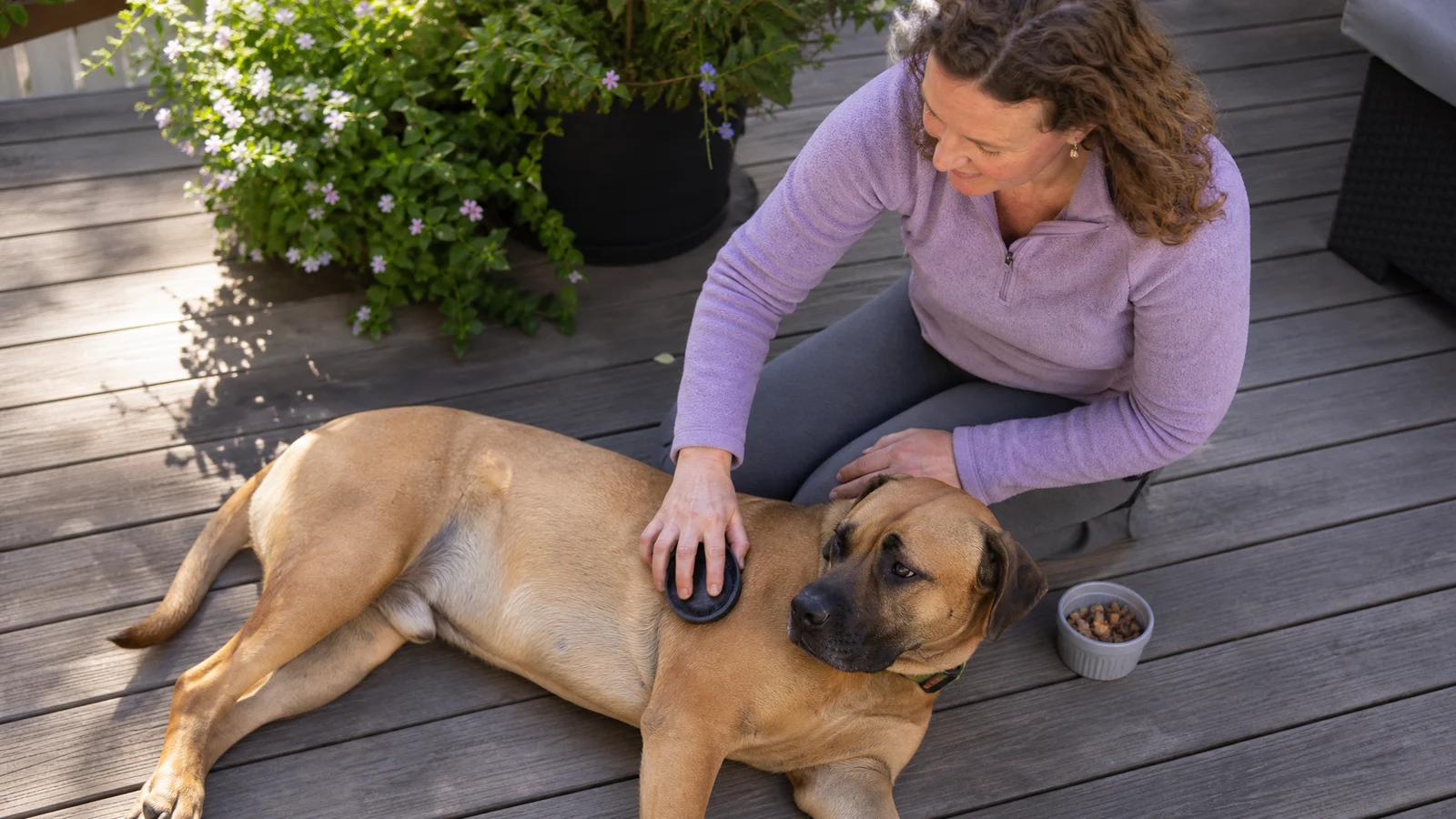 CareBrush Time Without a Fight: Shedding and Grooming Cooperation