 Black Mouth Cur
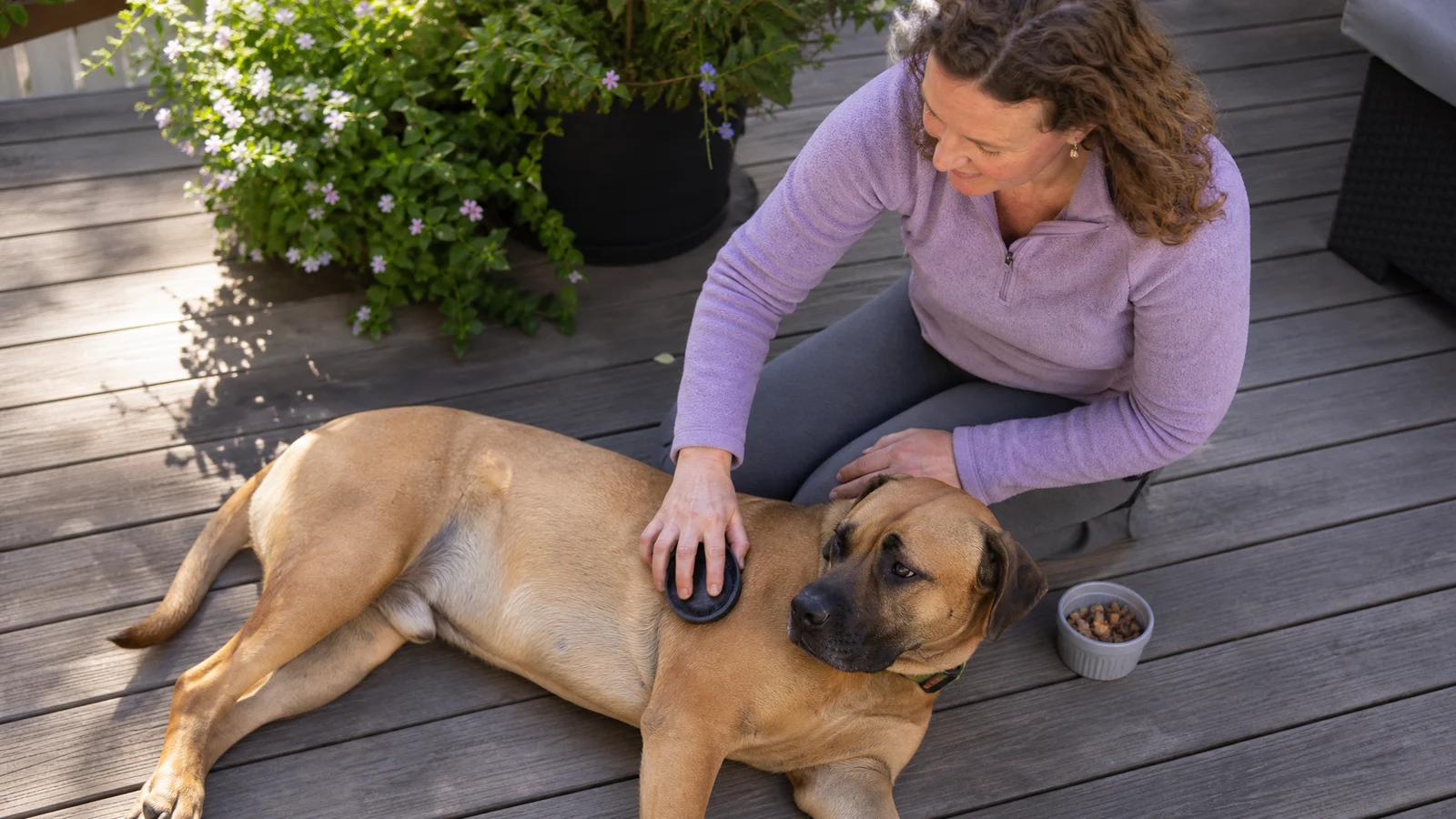
Most advice about grooming a working breed fits on a sticky note: brush now and then, bathe when needed, and otherwise leave the dog alone. Nobody lists grooming among the hard parts of life with a Black Mouth Cur, and a breed built around work and stamina doesn't sound like it needs much fuss.
In real homes, the coat is the easy part. The hard part is a strong, wriggling dog who treats the brush as a toy, spins during a nail trim, and clamps their mouth on whatever hand is closest. We have trained this breed for many years, and cooperative handling is one of the cheapest skills to build.
In this article, we'll go through the coat, the gear and treats worth buying, and the short sessions that survive shedding season. Done well, grooming turns calm, and vet exams get easier too.
Black Mouth Cur Coat Basics
Check the couch cushion, the dark car seat, and your own pants after a hike, and you'll learn more about this coat than a breed description can tell you. Coat length, density, and how much hair comes off vary from dog to dog and line to line. Nobody has pinned down one coat type for the breed, so go by what you see and not by what you assume.
The breed is judged as a working dog, with faults weighed by how much they interfere with work. Grooming here is about comfort and cooperation, not polish.
Track shedding the way you'd track the weather. Over a year, note when the brush fills faster and when hair starts collecting in corners. Most dogs have a heavier stretch or two, and that is your cue to add short sessions, not to scrub harder. Patchy hair, red skin, or constant scratching is a question for your vet, and regular vet visits are the place to raise it.
What doesn't vary much is the energy. A dog bred for stamina won't lie still for a brushing just because you asked nicely.
Grooming Brushes and Gear
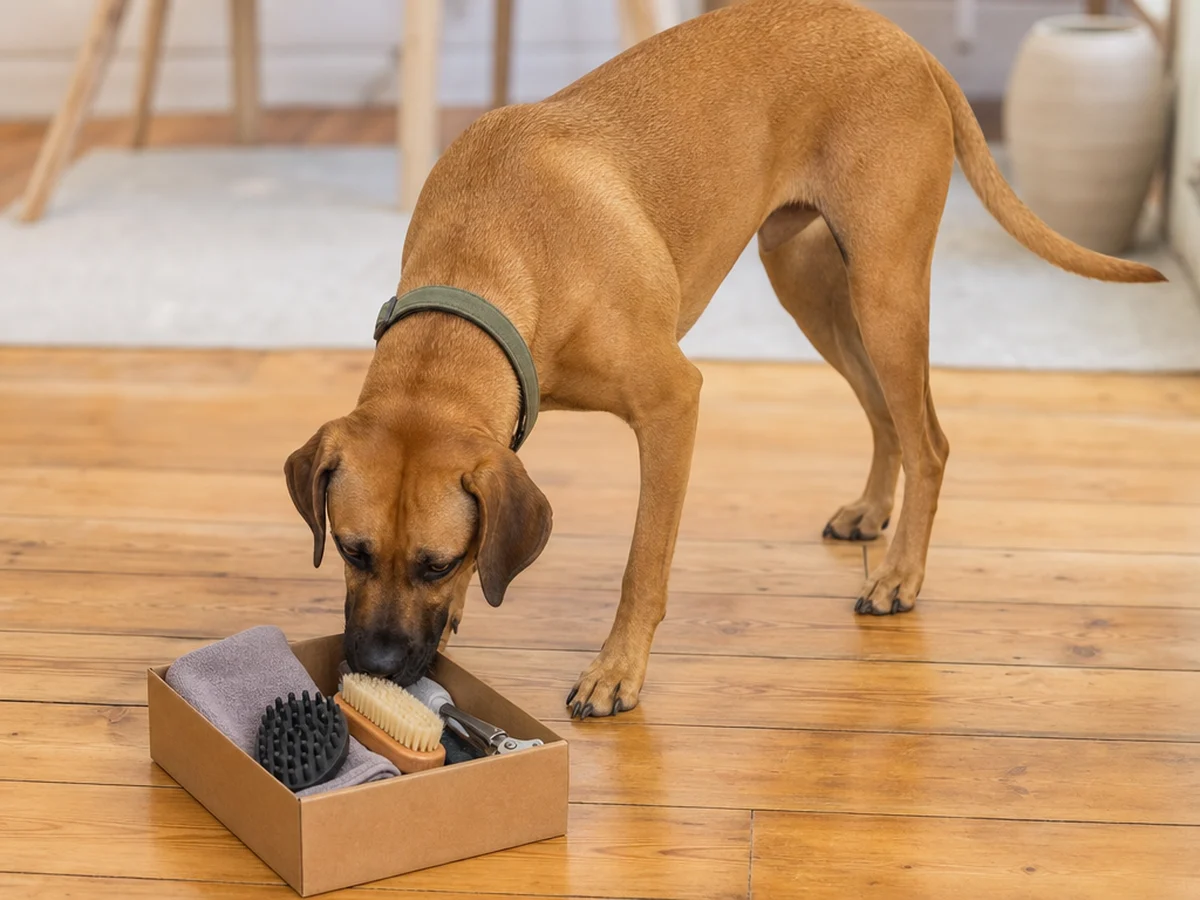
Your whole grooming kit can fit in a shoebox, and it should, because every extra tool is another thing a curious dog can grab and carry off to the yard. Buy little, introduce each item on its own, and let the dog sniff it and earn treats before it touches their body. That is the gradual, reward-based training approach to equipment, products, and the setting, and it works far better than surprising a dog with a buzzing grinder.
Brush Types
Start with a rubber curry brush or a grooming mitt. It feels like petting, it lifts loose hair, and a dog who mouths it does no harm. Add a bristle brush for finishing once the mitt gets boring. If a brush turns into a chew toy, put it away and go back to the mitt, because brushes are cheap and cooperation is not.
Introduce each brush the same way. Show it, treat, touch it to a shoulder, treat, then put it away before the dog gets bored.
Nail Gear
Nails are where a wriggling dog turns into a wrestling dog. Pick clippers or a grinder you can hold steadily in one hand, and spend the first several sessions doing nothing but showing the tool and feeding treats. Touch a paw, treat. Hold a paw, treat. Only then is a single nail worth attempting, and stopping after one nail is a perfectly good result.
If you aren't sure how much to trim, ask your vet or a groomer to show you once. A demonstration beats guessing.
Bath Items
Bathing a muscular, soapy, excited dog in a slippery tub is a fine way to get soaked and teach them that baths are a rodeo. Gather everything first: a non-slip mat, dog shampoo, a cup for rinsing, and plenty of towels. Bathe when the dog is dirty or smelly rather than by the calendar, and keep the water comfortably warm.
Introduce the mat, towel, and shampoo bottle on dry land, with treats, long before the first real bath. By the time water shows up, half the scary parts are already boring.
Treats for Black Mouth Curs
A breed described as having a strong desire to work is usually happy to work for pay, and in grooming the treat is the paycheck for holding still. Which treat you pick and how fast you hand it over decides whether a session lasts half a minute or turns into a negotiation with a dog who has far more leverage than you do.
Treat Value
Rank your treats before you start. Plain kibble is low, a soft training treat is middle, and small bits of cooked chicken or cheese are the jackpot. Save the jackpot for the hard parts: nails, paws, ears, and the first touch of any new tool. When the dog starts ignoring the treat, the job got harder than the pay, so upgrade the reward or make the task smaller.
Keep treats tiny and soft so chewing doesn't stall the session. A dog still working on a crunchy biscuit isn't ready for the next touch.
Delivery Pace
Timing wins or loses most sessions. Mark the exact moment the dog goes still with a short word like yes, then deliver the treat, so they learn what earned the pay. Feed steadily at first, a treat every touch or two, and stretch the gap only as the dog stays loose. A dog who gets paid late learns that wriggling is what makes the snacks appear.
If the dog starts snatching at your hand, slow down and deliver from a flat palm held low. Snatching means the pay is arriving too slowly or the dog is too wound up.
Licking Mats
A smeared lick mat is the nearest thing to a grooming assistant. Spread something soft and dog-safe on it, press it flat against a wall or the side of the tub, and brush while the dog licks. Licking is calming, and it keeps the mouth busy, which removes the most common way a dog says no to handling.
Use the mat for brushing and bathing, but keep nail and paw work for hand-fed treats so you can watch the dog's face. Faces tell you early when a dog has had enough.
Grooming Spaces
Most grooming goes wrong in the kitchen, on a slick floor, while the household walks past with groceries. A dog sliding on tile braces, and a dog who braces will wriggle the moment you touch a paw. Pick a spot with grip, such as a rubber-backed bath mat or a yoga mat, in a quiet room with the door closed.
Some dogs relax better when raised. A sturdy bench or low table with a non-slip mat puts paws and nails at your level and saves your back, but only use height if the dog is comfortable hopping up and the surface cannot wobble. If they tense, go back to the floor.
Use the same spot every time. The mat becomes a cue, and the dog learns that this place means calm and treats.
Keep other pets, children, and loud noise out of the room, because a work-minded dog gets busier the more there is to watch. If the dog is large and wriggly, a second person feeding treats keeps your hands free, and dogs figure out fast which end of the setup hands out snacks.
Short Grooming Sessions
A brief stretch of touching a calm dog beats a long fight with a stirred-up one, and the long fight mostly teaches the dog to dislike the brush. Think in sessions of 30 to 60 seconds, end while the dog still wants more, and work down this list in order, staying on each step until it looks dull.
- Touch before tools: rest your hands on the shoulders, back, and chest for a few seconds, mark the stillness, and treat, with no brush in sight.
- Visit the awkward spots one at a time by lifting a paw, folding an ear back, sliding a finger along the lips, and touching the base of the tail, rewarding each tiny moment of calm.
- Bring in the mitt for one slow stroke, mark, treat, then stop.
- Add strokes gradually, one more only after the dog has stayed loose through several sessions in a row.
- Finish with a release word and a quick game or chew so grooming ends on a high note.
The touch-first rule borrows from tooth care, where the advice is to spend a few weeks gently massaging the lips for 30 to 60 seconds, once or twice daily, before a brush goes anywhere near. Paws and ears suit the same schedule. Boring and repetitive is the goal.
Expect mouthing and plan for it. Many puppies mouth more when overstimulated, tired, or struggling to cope, and they also mouth to get away from handling they dislike. So when teeth show up, don't escalate. Freeze your hands, wait for calm, offer a chew in place of your fingers, and end the session if it happens again, then make the next one shorter.
Teaching a soft mouth matters beyond grooming. Bite inhibition counts for every dog, because a dog in pain or afraid may one day put their mouth on someone.
Shedding Season Grooming Plan
When hair starts showing up on the couch, the instinct is to brush hard and long. Resist it. A dog who has just had one endless session learns to leave the room when the brush appears, and shedding season lasts long enough that you need the dog on your side for all of it.
Raise the frequency, not the length. Several tiny sessions a day work as well as one marathon and keep the dog's mood intact. Use the mitt first, then the bristle brush, and bump the treat value up while the coat is coming out, because you are asking for more patience.
Brush after exercise, when the dog has burned off energy. A tired, stamina-bred dog stands still far better than a fresh one.
Take the session outside or onto a washable mat so cleanup is one shake of the towel, not a vacuum marathon. If the dog gets sticky about brushing, drop back to touch-only days for a bit and rebuild. A coat that thins in patches, or skin that looks red or sore, deserves a professional look, not more brushing.
The hair will always beat the vacuum eventually. It cannot beat a dog who leans into the mitt every single day.
Black Mouth Cur Grooming Questions
Here are the questions that usually come up after the basics are in place. Each gets a short answer.
- When can a puppy start groomer visits? Once your vet confirms the puppy is fully vaccinated, and the first visit should be a brief, happy stop with treats and no actual grooming.
- What if the dog mouths the brush? Pause, wait for calm, and offer a chew, then shorten the next session, because mouthing usually means the job got too long or too exciting.
- Is tooth brushing worth building? Yes, so start with the lip-massage routine for a few weeks and ask your vet to show you the next step.
- How often should a dog be groomed? A touch-and-treat moment can be daily, while brushing should follow what comes off the dog, more often in heavy shedding and less when the coat is quiet.
This article is general information, not veterinary advice. Check with your veterinarian about when a puppy can begin groomer visits, how short to trim nails, tooth care, and any skin or coat changes before you start.
A Black Mouth Cur is a medium-size working dog bred for stamina, and that same engine keeps running during a nail trim. The answer isn't to out-muscle them but to make cooperation the best-paid job in the house: a tired dog, a quiet mat with grip, tiny soft treats, a few seconds of touching, then done. Build that now, and shedding season, baths, and vet exams all get easier.
 BehaviorStop Destructive Chewing in a Black Mouth Cur
 BehaviorBlack Mouth Cur and Cats: Teaching Calm Around Small Pets
 Training basicsSmart and Strong-Willed: Impulse Control and Focus Games