 Black Mouth Cur
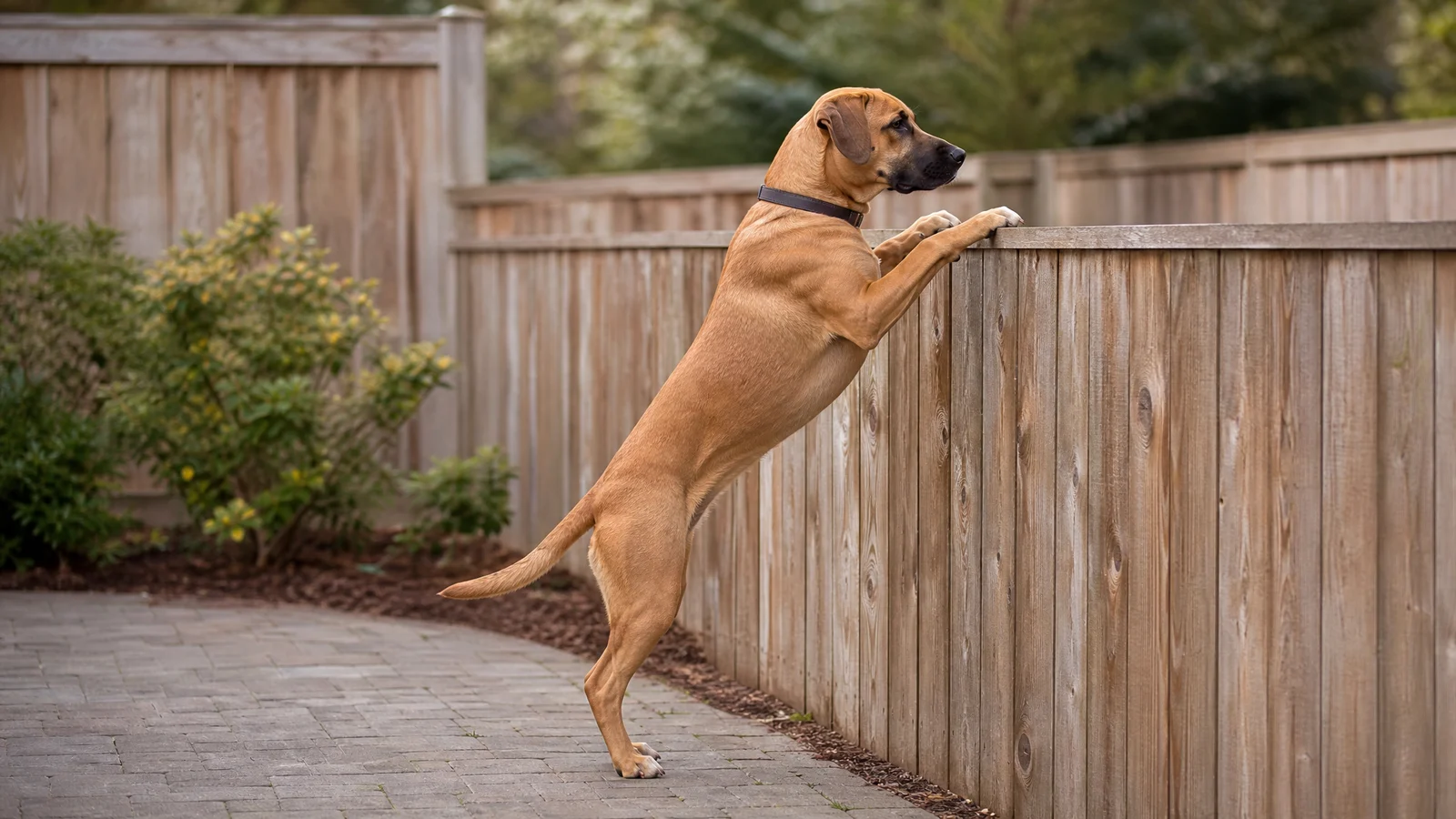
Fence height helps, but it does not explain why the dog wants to leave. The breed standard emphasizes tenacity, courage and working drive, so a boundary can become another problem for a Black Mouth Cur to solve.
This article looks at jumping the fence by testing the common beliefs about it. You will be able to find the weak points in your own yard, work out why your dog heads for the boundary, and run a daily routine that pays for calm and offers better things to do than leave.
The stakes are real. A dog who gets out meets traffic and strange dogs, and every escape rewards the next attempt. Our work centers on Black Mouth Cur behavior, and the same few beliefs keep sending owners down the wrong path.
A Taller Fence Ends Jumping the Fence
The belief is that more height settles the matter, and it is only half right. Extra height stops a mildly curious dog, but a Black Mouth Cur is rarely mild. The standard credits the breed with tenacity and courage, and it asks for a working dog in hard, muscular condition. A dog like that treats a fence as a problem to solve, and solving obstacles is what they were bred to do.
What an Athletic Dog Can Clear and Climb
The standard sets minimum heights of 18 inches for a mature male and 16 inches for a mature female, with minimum weights of 40 and 35 pounds. That is a medium frame with a lot of spring and grip. Such a dog can clear a low fence from a standstill and scramble up anything with footholds, such as chain-link, horizontal rails or a stack of crates. A tree dog is made to climb.
Test your own dog instead of trusting a number. Stand them on their hind legs against a wall, mark their full reach, and make sure the fence rises well above that mark. If your dog has ever cleared the fence you have, it is too low for them, and each success makes the next attempt easier.
Where Extra Height Helps
Height is a good base layer. A taller, smooth and solid fence removes the launch point and the view of the street, which settles many dogs. What height cannot change is why your dog wants out. Treat it as step one of a larger plan: close the other weak points, then give your dog reasons to stay.
Is a Black Mouth Cur Jumping the Fence Out of Spite?
The spite belief says a dog jumps because they are angry about being left outside. Dogs do not plan revenge. The jump comes from drive, boredom or interest in something beyond the fence, and it only looks spiteful because it often happens while you are out of sight. A working-bred dog with nothing to do will invent a job, and patrolling and escaping is an easy one to find.
What Pulls a Cur Over
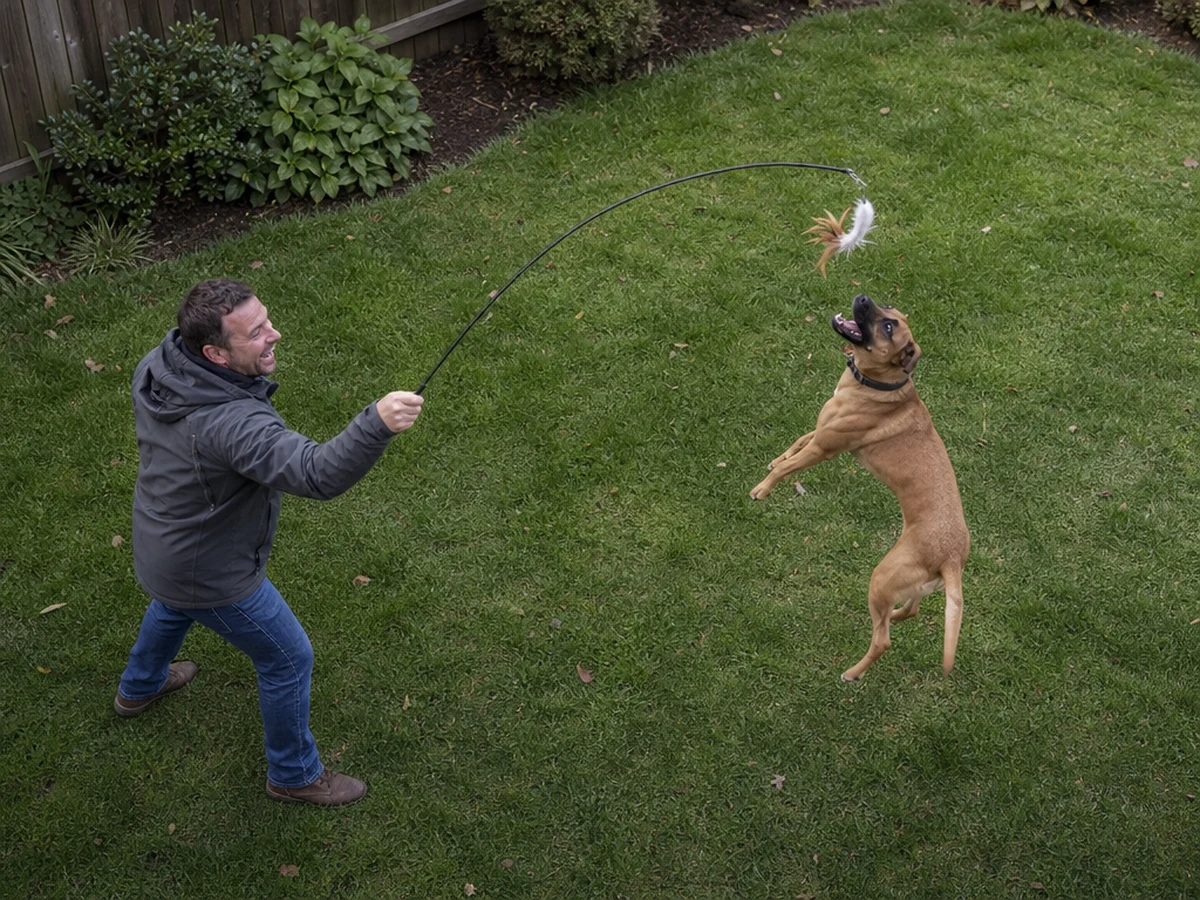
Movement is the most common pull. Squirrels, cats, joggers, bikes and passing dogs all fire up a dog bred to trail and tree. Scent comes next, such as a trail along the fence line or an animal that crossed the yard overnight. Boredom is the quiet cause. Dogs need things to do and company, and a Cur left outside with neither will walk the perimeter until the walk becomes an escape.
Read the Cause From a Window
Watch your dog from inside the house. A dog who launches at one spot when something moves is chasing an interest. A dog who paces the whole line, digs in several places and tests the gate is bored. Either way, remove the reason and skip the character judgment.
If the jumping comes with panic whenever you leave, ask your veterinarian to check them, and read about the instincts behind behavior problems. Regular vet visits also catch pain or health changes that can show up as restlessness.
The first successful jump pays well, with a chase, new smells and freedom. After that, every trip to the fence is practice, so treat one escape as a signal to close the exit before the next try.
A Black Mouth Cur Jumping the Fence Finds Every Weak Spot
The belief that only low fences fail is why so many tall fences leak. A determined Black Mouth Cur goes to the easiest spot, not the highest panel, so walk the whole line the way a capable athlete would. Work through this checklist in order.
- Fill gaps along the bottom edge and replace loose boards, since a medium-sized dog can squeeze through less room than you expect.
- Look for dig lines, meaning dips or bare patches along the fence, then fill them and lay flat pavers or buried wire along the base so digging pays nothing.
- Move woodpiles, trash cans, grills, tables, doghouses and stacked crates well away from the fence, because anything a dog can stand on becomes a ramp.
- Test every gate. Check the hinges, close any gap beneath it, and fit a latch the dog cannot nose open or bump loose.
- Replace climbable chain-link or wire panels with smooth, solid ones, or line the lower section with a smooth surface.
- Trim trees and shrubs that work as a ladder, and add an inward-angled top section where a dog could still get a grip.
Recheck the fence after storms and whenever something new goes into the yard. Until the work is done, take your dog out on a leash and stay with them. A half-fixed fence only teaches your dog where the weak spot is.
A Tired Black Mouth Cur Stops Jumping the Fence
The belief is that a worn-out dog has no energy left to leave. For a breed built for stamina, that holds for a short while at best. More running tends to build fitness rather than calm, and a Cur can recover quickly and then head straight for the fence line. Our exercise guide covers amounts. The point here is that the kind of exercise matters as much as the amount.
Tired Is Not the Same as Satisfied
A physically tired dog has spent muscle. A mentally satisfied dog has used the nose and brain that make this breed what they are, and that dog settles for hours. A dog who is tired in body but empty in mind can still go looking for a chase. Aim for both kinds of work every day.
Mental Work That Settles a Cur
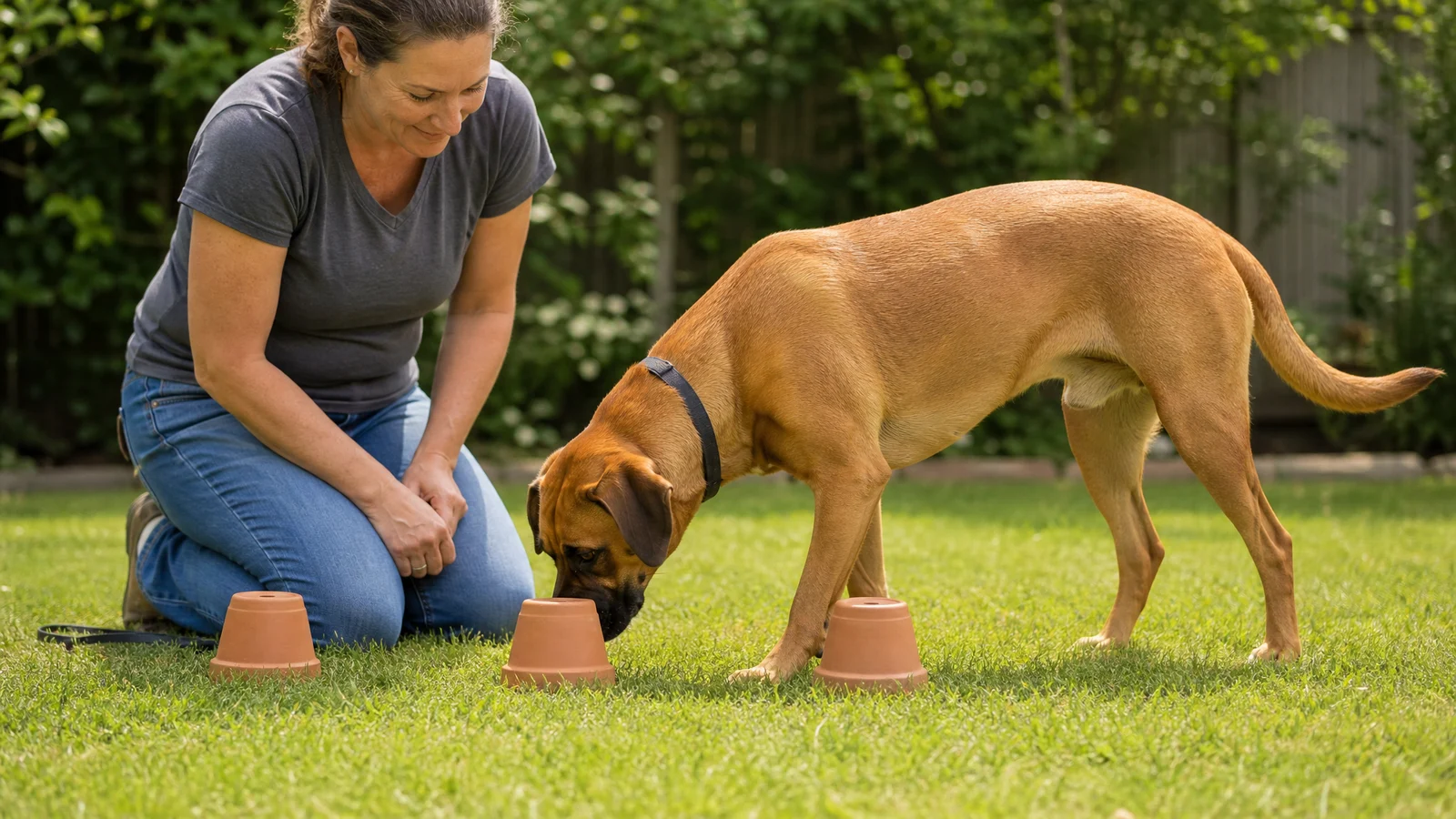
Scent work suits a tracking breed. For boredom, scent games and training are the recommended answer. Scatter treats in the grass, or hide a favorite toy around the yard or house, and let your dog find them. For a bigger challenge, try a home version of K9 Nose Work. Set out a row of boxes, hide a treat in only one, and let your dog sniff out which. Then move the search to harder spots indoors and out.
Add a short training session on a new cue or trick each day, a game of tug with a clear start and stop, and sniff-heavy walks where your dog follows scent at their own pace. Rotate these through the week so none gets stale. A chew afterward gives them a calm way to finish.
Will Yard Time Alone Cure Fence Jumping?
The belief is that opening the door and letting a dog burn energy outside will fix the problem. For a bored Black Mouth Cur it usually does the opposite. A bare yard is dull for a working dog, and unsupervised hours give them time to watch the street, test the fence and practice the very thing you want gone.
Why a Bored Dog Rehearses Jumping
If a jump ever works, even once, the dog learns that this spot pays, and a tenacious breed keeps trying. You are not there to interrupt or to reward anything better, so the yard teaches whatever your dog finds on their own. Keep unsupervised time off the schedule until the fence and the routine are both in place.
What Supervised, Structured Yard Time Looks Like
Change what the yard means. You want it to mean lying down and relaxing, and you get there by paying for exactly that. Keep your dog on a leash at first and follow these steps in order.
- Carry a mat or bed outside and place it well away from the fence, ideally out of sight of the street.
- Bring a pocketful of small, soft treats and sit near the mat. Wait for your dog to lie down on their own, or ask for a down.
- The moment their elbows touch the ground, mark the moment and place a treat on the mat.
- Keep feeding while they stay down, then slowly stretch the gap between treats so calm lasts a little longer each round.
- Release them with a release word before they get restless, so every session ends on success.
- When this is easy, slide the mat closer to the fence in small steps and pay well whenever they stay settled while something moves nearby.
If your dog locks onto the fence or the street, you moved too fast. Go back to the last easy spot.
Rewarded Calm Replaces Jumping the Fence
Teach the response you want at the boundary. A look back, a move to the mat and a relaxed body earn rewards, while the pull toward the squirrel or street loses practice. The ASPCA explains that motivation can remain even when territorial noise stops, so the calm replacement matters.
A sensitive Cur learns best when yard practice stays predictable. If your dog is easily overwhelmed, see confidence building for Black Mouth Curs. If fence trouble centers on people walking by, the calm visitor routine covers the same protective streak.
Build two habits. First, reward calm. When your dog notices movement beyond the fence and then looks back at you or stays settled, mark it and give a treat. If they are too wound up to listen, calmly walk them to the mat and pay there.
Second, give them a better place for their energy, such as treats scattered in the grass for a sniff hunt or a long-lasting chew while the street goes by. Rotate the outlet across the week.
Calm Yard Time Beats Fence Height
Height, a sturdy latch or an extra walk will each help a little, but no single fix holds a Black Mouth Cur. This is a dog of stamina and courage who wants a job, so the answer is a secure yard plus rewarded calm plus real outlets. The fence keeps them safe while you teach, and the routine gives them a reason to stay. The next two weeks look like this.
- First stage: Secure the fence. Walk the line, fix gaps, dig lines and gates, move climbing aids away, and take your dog out only on a leash.
- Next stage: Run mat practice in the yard every day, far from the fence, and pay for lying down. Add one outlet each day, such as a scent game, a box search or a short training session, and rotate them. Recheck the fence daily.
- Review stage: Review what changed. Note where your dog still fixes on the fence, adjust the mat distance or the outlet, and move the mat closer to the fence only if calm has held.
Keep the pattern going once the two weeks are up. A Black Mouth Cur whose body and mind are both used at home has far less reason to leave, and a dog who has learned that the yard is where calm gets paid stops treating the fence as the most interesting thing around. You end up with a safer yard, a settled companion, and a dog who chooses to stay.
 Training basicsBlack Mouth Cur Temperament: Are They Easy to Train?
 Puppy trainingBlack Mouth Cur Puppy Training Timeline, 8 Weeks to 2 Years
 Exercise and jobsJobs and Sports for a Black Mouth Cur's Working Drive