 Black Mouth Cur
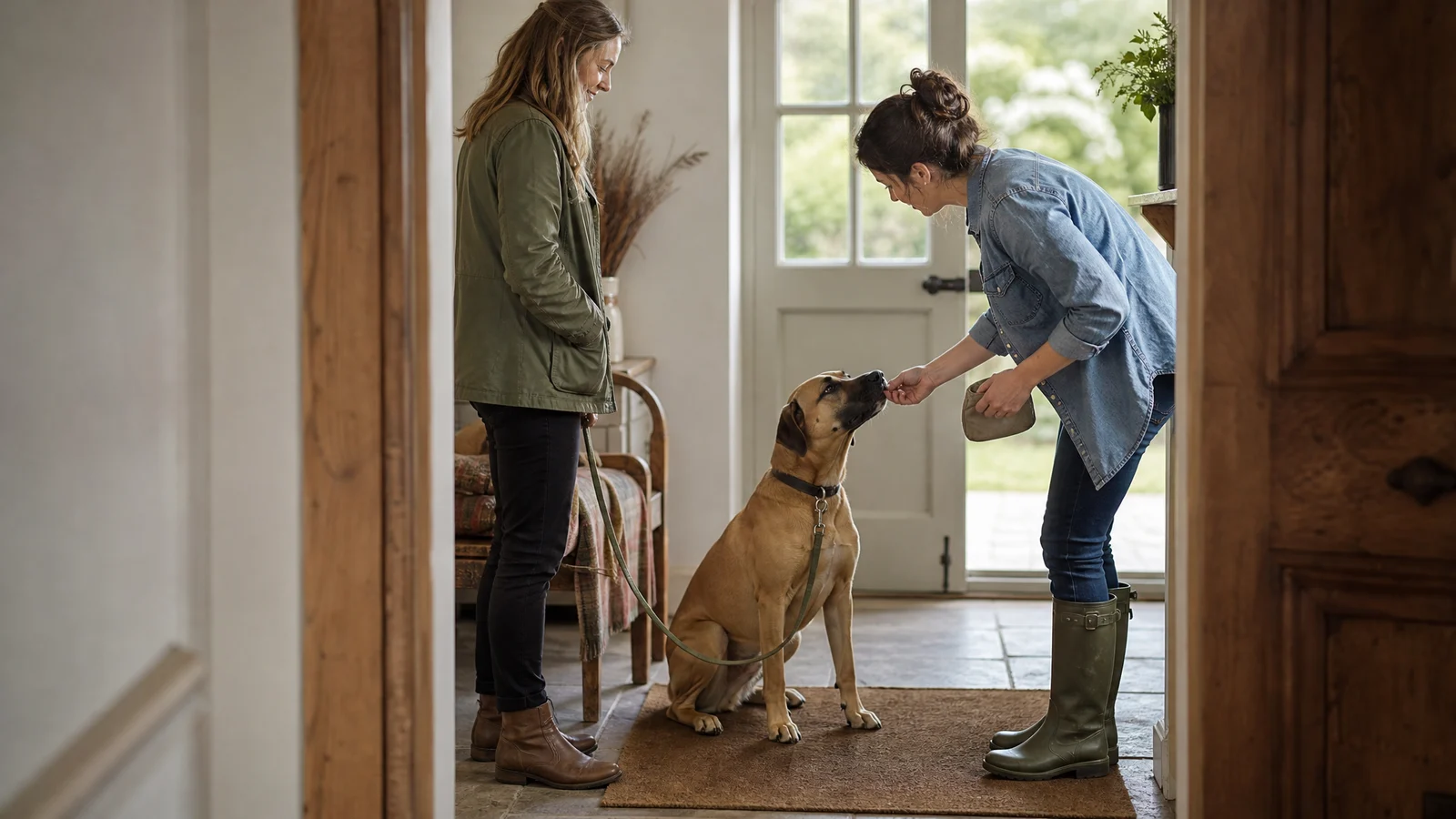
The Black Mouth Cur standard calls the breed very loyal and protective of their owner and family, and much of the usual advice stops there, as though watchfulness were a bonus you simply enjoy. Then the doorbell rings. The dog who dozed all afternoon is up and barking, stiff through the shoulders, while your guest waits on the porch wondering whether to come in.
This article looks at guarding at your front door, so you can tell alert from reactive, teach a mat cue for the moment the knock comes, reward calm greetings, and plan introductions that keep dog and visitor comfortable. Done well, you get a loyal watcher who speaks up once and then hands the situation to you. Done badly, a useful instinct hardens into a daily habit of alarm.
The Guarding Roots of the Black Mouth Cur
Start with the work. Early American settlers used these dogs widely as all-round working dogs, and as Americans moved west the Black Mouth Curs moved with them, serving as hunting dogs and family guardians. Where the breed began is uncertain, with some writers pointing to the Tennessee mountains and others to Mississippi. Either way, the job on the homestead was twofold: be useful, and keep watch over the people who live there.
That history lives in the temperament. The breed combines tenacity and courage with a strong desire to work. Picture a dog who spots a stranger walking up the drive. Tenacity means they do not drop the concern quickly. Courage means they step toward the unknown instead of away from it. Both traits are a gift on a farm and a challenge in a hallway.
Even the breed's voice has a story. Silent trailers are preferred, and the accepted sounds are a loud, deep chop, a ringing cry or a slight yodel, never a full-blown bawl mouth. Nothing in that describes a nonstop barker. Your aim at home matches it: a dog who speaks when it matters, then stops and looks to a person they trust.
What Guarding Instinct Means Today
A homestead dog had a clear job and plenty of ground to cover. Yours has a doorbell, a mail carrier and a front window. The instinct is the same, but the outlets are different, so the watchfulness lands on whatever passes the house. Training and living with this breed is our daily focus, and one pattern holds: Curs do best when their people teach them what to do with the instinct instead of hoping it fades.

What Alert Looks Like
An alert Cur lifts their head, turns toward the sound and may give a few woofs. The body stays workable, with a soft mouth, a loose or gently moving tail and balanced weight. When you thank them calmly and walk to the door, they glance back at you and can take a treat without snatching. The bark is information, and they are handing it to you.
What Reactive Looks Like
A reactive Cur goes rigid. The stare is hard, the mouth closes, the body leans toward the door, and the barking rolls on after the visitor has stopped moving. Treats are ignored and your voice does not register. Lunging, spinning at the door and raised hair along the back belong here too. This dog has stopped gathering information and started acting, and that calls for a plan.
Some Curs bark out of worry, not confidence. If that sounds like yours, building confidence in a sensitive dog pairs well with everything below.
Why Does My Black Mouth Cur Bark at Every Knock?
Door barking is a chain, and each link is easy to spot once you look for it. The knock predicts a stranger. A loyal, watchful dog announces the stranger. You hurry over, the visitor steps back or the knocking stops, and from the dog's side the barking worked. Repeat that sequence daily and it becomes a rehearsed routine.
What the Barking Gets Your Dog
Door barking usually serves one of a few goals: telling you someone is there, making the stranger keep their distance, or getting you to take over. Barking that eases once you arrive points to the first. Barking that continues with a stiff body points to the second. A dog who paces, whines and bounces between you and the door is often asking for help.
Energy and Health Factors
Pent-up energy makes everything louder. A working-bred dog with little to do will find work, and the front window is always hiring. Dogs without enough outlet often invent other jobs, from patrolling the fence to Black Mouth Cur destructive chewing. Daily exercise and mental work lower the baseline, so the doorbell lands on a calmer dog.
One caution. If a dog who was easy with visitors turns edgy or starts barking out of nowhere, book a vet visit before changing any training, since discomfort can shorten anyone's patience. Regular vet checkups are good practice for every Cur anyway.
Place-and-Settle at the Door for a Black Mouth Cur
A mat gives your Cur a job that is the opposite of patrolling: go there, lie down and wait while you handle the door. That suits a dog with a strong desire to work, because they get paid for doing something. Use only reward-based methods at every step.
Choose a mat or bed with a nonslip bottom and place it a few steps from the door, out of the way of anyone walking in. Pick a short word like yes as your marker. Before using it at the door, pair the marker with food: say it, then give a treat within 3 seconds, and do this many times in a calm, quiet room. Once the word predicts food, build the cue in stages.
- Reward any contact with the mat, first a paw, then all four feet, then lying down. Drop treats onto the mat so staying there is where good things happen.
- Add a release word, then stretch the duration slowly. Pay for a loose, rolled-hip settle, not just any down.
- Move the mat closer to the door in small steps and repeat stage two at each spot, with the door closed and nobody outside.
- Add door sounds at low volume, such as a recorded bell or a soft tap, and pay on the mat for every moment of quiet. Raise the volume only when the dog stays loose.
- Add the door itself. Touch the handle, open a crack, close it, treat. Then step outside and come back in.
- Recruit a familiar helper to wait outside and enter quietly while you pay the dog on the mat. Move on to less familiar people, then to truly new ones.
- Use the cue for real visitors. Send your Cur to the mat while the door is still shut, then give a chew or scatter treats to keep them busy.
Resetting an Overly Difficult Door Step
If your Cur leaves the mat or the barking returns, the step was too big. Walk them back without fuss, return to the previous stage and make it easier. Practice in short sessions on ordinary days, not only when guests are due, so the mat means comfort long before it means company.
Rewarding Calm Greetings Over Guarding
Greetings are where the mat becomes real, because now there is a stranger in the room. Pay for what you want to grow: a soft body, a sniff, a glance back at you, a turn away. Mark the moment the shoulders loosen and deliver the treat low and calm, not over the dog's head, where it can feel like pressure.
Brief Your Guest Before They Come In
Guests make or break this step, so ask for a few simple things. Ignore the dog at first, with no eye contact, no reaching and no baby talk. Sit down, because a seated person looms less. Let the dog approach on their own terms and never call them off the mat. A guest who wants to help can toss a treat to the side, away from the dog's face.
Be consistent about petting, too. Many guests hand out enthusiasm all at once, and an overexcited or wary dog reads that as pressure. Advice on mouthing makes a point that applies here as well: respond the same way whoever handles the dog, because allowing something with some people and not others confuses them. If children visit, gentle Black Mouth Cur play with kids covers the ground rules.
Pay for the Loose Body
Watch for signals that say yes: a curved, wiggly body, a relaxed mouth, sniffing the guest's shoes and then wandering off. Mark and pay those moments. Keep early visits short and finish while your Cur is still easy and loose, back on the mat with a long-lasting chew. Short visits that go well teach more than long ones that end in tension.
Should Guests Meet a Guarding Dog Right Away?
Usually not. A loyal, watchful dog does better when they can study the newcomer before being asked to touch them, so the first minutes are about distance and time, not hellos. You are teaching your Cur that the stranger is part of the household routine and that you are the one who vouches for them.
Set the Stage
Before the bell rings, settle the dog on the mat, behind a baby gate, or in a crate or room with a stuffed chew, whichever they already relax in. A leash can hold them at a polite distance, kept loose and used only for management. Open the door, let the guest enter and have them sit before the dog sees them up close.
Sequence the Meeting
Let the dog watch from across the room while the guest ignores them. When the dog looks loose and curious, allow a few steps closer, with the guest still seated and turned sideways. Pay each calm look. If your Cur sniffs, allow it. If they back off, allow that too. Send them back to the mat before they tire.
When to Skip the Meeting
Skipping is a legitimate choice. If your Cur is stiff, staring, barking without pause or unable to take a treat, they are too aroused to learn, and a forced hello makes the next one harder. The same goes for delivery people and tradespeople who will not follow instructions. Put the dog in another room with a chew and a closed door. For some visits, never meeting anyone is the successful outcome.
Calmer Door Guarding and When to Get Help
Progress with a tenacious breed rarely looks dramatic. It looks like small things getting a little easier, visit after visit. These are the signs your approach is working:
- The barking at the knock gets shorter, and your dog looks to you or heads for the mat before you ask.
- They settle on the mat with a loose body and hold it while the door opens and the guest walks in.
- They take treats calmly with a guest in the room, which shows they are relaxed enough to learn.
- They approach, sniff and walk away on their own, instead of hovering and staring.
- They recover quickly after a visit and go back to dozing.
Other signs call for a professional trainer or veterinary behaviorist who relies on rewards. Act on them promptly instead of waiting to see whether the next visit goes better:
- A frozen, stiff posture with a hard stare and closed mouth aimed at guests.
- Lunging or charging the door, or barking that does not ease with distance or treats.
- Snapping, air-snaps, growling that escalates, or any bite or attempted bite.
- Reactions that spread to familiar visitors, to windows, or to the yard fence.
- A sudden change in a dog who used to be easy, which also deserves a vet visit.
A Black Mouth Cur's watchfulness comes from loyalty, and that loyalty is a large part of why the breed is so rewarding to live with. You do not need to remove the instinct.
You need to give it a clear place to go: a mat to settle on, enough exercise and mental work to keep the baseline low, calm rehearsals before real company, and guests who move at your dog's pace. Do that consistently and the dog who once sounded the alarm at every knock learns that you have the door covered, and they can finally relax.
 BehaviorFence Jumping in Black Mouth Curs: Secure Yards and Better Outlets
 Training basicsBlack Mouth Cur Temperament: Are They Easy to Train?
 Puppy trainingBlack Mouth Cur Puppy Training Timeline, 8 Weeks to 2 Years