 Black Mouth Cur
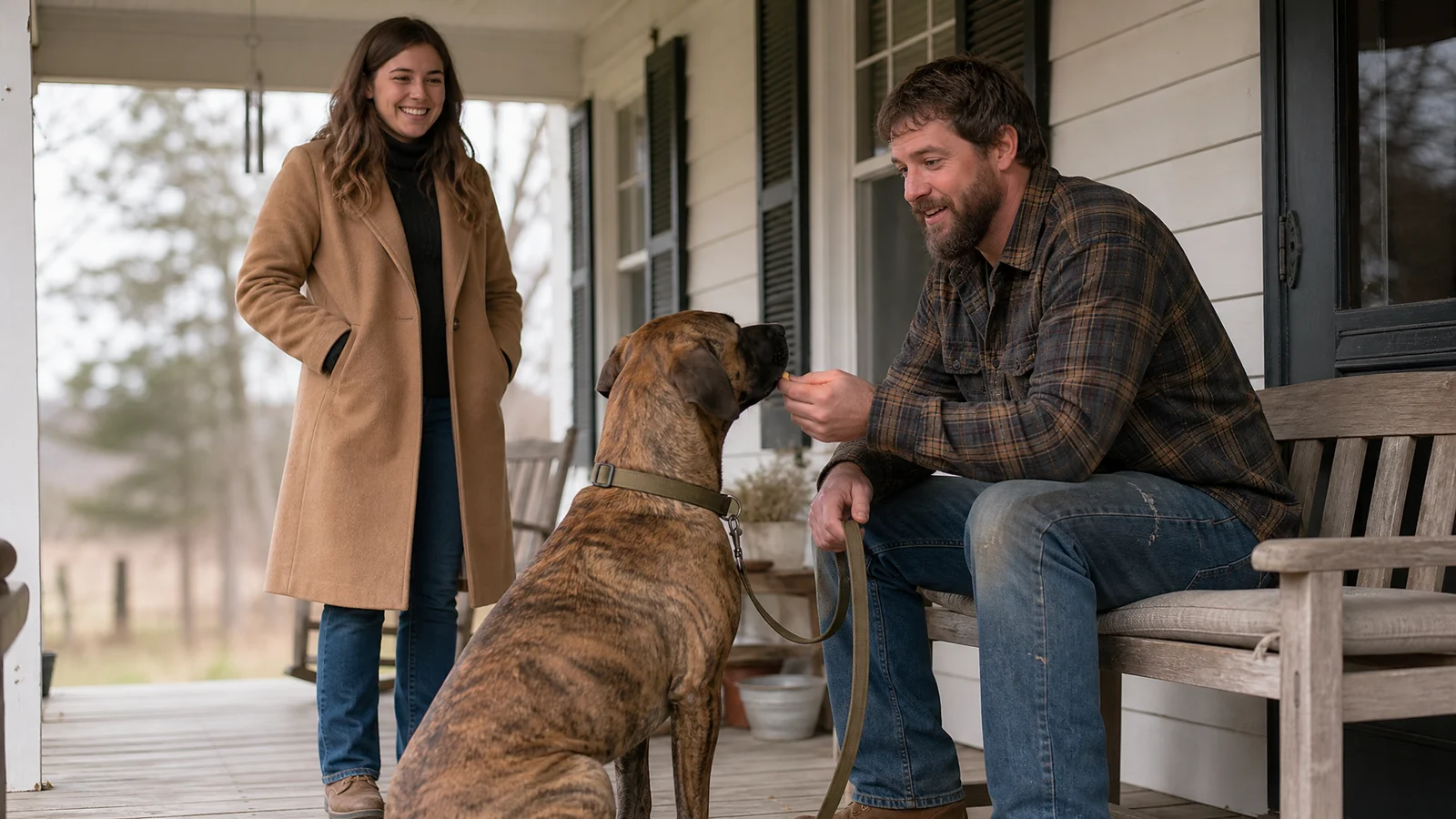
Most advice for a jumping dog says to turn your back, fold your arms, and wait for the paws to drop, and with plenty of breeds that is enough. With a Black Mouth Cur the doorbell still sets off a launch, a guest still leaves with scratched forearms, and the family starts to wonder whether this is simply who the dog is.
It matters more in this breed than most. A mature male at the standard's minimum already weighs 40 pounds, and a loyal, working-bred dog greets with the whole body, so a welcome left alone becomes a daily rehearsal. Handled well, the same enthusiasm becomes the best part of coming home.
We'll walk you through the beliefs behind jumping, from excitement and ignoring to old hands-on fixes and age, then finish with one short sit-to-greet rep for your front door today.
Black Mouth Cur Behavior Problems
A familiar belief says a jumping dog is being pushy and out to test you on purpose. A Black Mouth Cur at the door is doing something simpler. The jump is an excited greeting that has been paid for often enough to become a habit, so the useful questions are what the dog is after, who has been paying, and why the excitement builds before anyone touches the knob.
What the Dog Is After
The breed standard describes tenacity, courage, and a strong desire to work, in a dog who is very loyal to their family. A dog built that way does not leave a reunion half finished. Paws go up, the tail sweeps, and the face aims for yours, which is closeness sought by a body with no quieter way to ask.
The standard's minimums are 18 inches and 40 pounds for mature males and 16 inches and 35 pounds for mature females. That is a lot of enthusiastic dog arriving at a guest's midsection.
What Rewards It by Accident
Every jump that earns a laugh, a hand on the chest, a stern word, or even a long look teaches the dog that jumping is how a person turns toward them. A scolding is still attention to a dog who wanted attention, so the habit grows when you meant it to fade.
This also explains why jumping can vanish for one calm household member and carry on with everyone else. A dog learns quickly who pays and who does not, so one steady person can look like a cure while visitors keep getting climbed.
How Arousal Builds at the Door
The excitement rarely starts at the jump. It builds from the sound of the car, the footsteps, the key in the lock, and the rising voices of people about to greet, until the dog has no spare attention left for manners. The jump is just where the pressure finally comes out.
Young dogs often add mouthing to the same greeting. Because playful mouthing is ordinary behavior in puppies and adolescents, treat it as part of the same excitement rather than a separate fault.
Jumping Behavior Problems, Not Manners
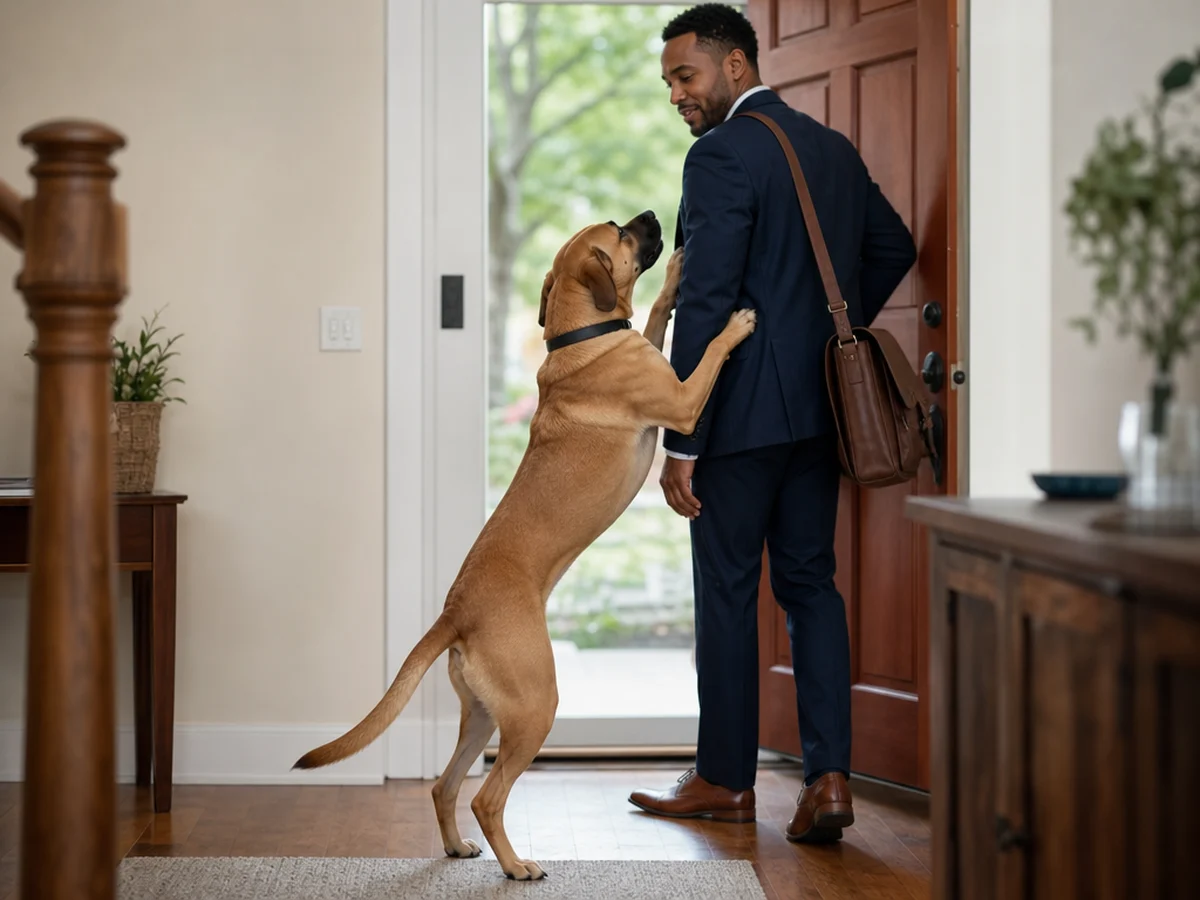
A jumping dog is usually chasing contact and activity rather than offering a trained greeting. In a Black Mouth Cur the picture is straightforward. This is a loyal dog with tenacity and a strong desire to work, and they greet the people they love with their whole body. The three parts below show what drives the jump.
What the Dog Is Really After
The goal is contact. Faces are up high, and a dog who cares deeply about their family wants to reach them. Jumping is the quickest route to eye contact, voices, and hands, which is attention-seeking, not a bid for rank.
How Accidental Rewards Add Up
Any lively response can pay for the jump. Turning toward the dog, talking, or making eye contact tells them that jumping makes a person engage. A dog who works for results repeats whatever works, so a few mixed responses are enough to build the habit.
Why Arousal Peaks at the Door
The car, the footsteps, and the key in the lock all stack up excitement before anyone is inside. By the time the door opens, the dog has little attention left for manners, and the jump is where that pressure spills out. Calm arrivals, a rewarded sit, and a quiet start to every greeting all lower the pressure before it peaks.
Black Mouth Cur Greeting Energy
The second belief is that a Black Mouth Cur is simply too much dog for calm greetings, and that the energy itself is the problem. Drive and trainability are different things, though, and this breed has plenty of both. A strong desire to work is exactly the quality that makes a dog eager to find out what earns the reward.
What that enthusiasm needs is a job at the door, not suppression. A sit, four paws on the floor, or a short wait for a treat all give the effort somewhere useful to go.
We specialize in Black Mouth Cur behavior and training. Quick learners pick up the wrong lesson as fast as the right one. That makes the first weeks of greetings count, because a bouncing welcome that gets rewarded a handful of times is already a habit.
Our guide to training without fighting drive covers the daily outlets that take the edge off, and the Black Mouth Cur temperament overview explains why cues stick when the pay is right.
Expect progress in stages, with the sit holding first in the kitchen, then the hallway, and last at the real door where excitement runs highest. A dog who manages two rooms but not the third is not failing, only telling you where to practice next.
Does Ignoring Fix Jumping Behavior Problems?
The third belief is that ignoring alone cures jumping, and it is half right. Withholding attention removes what the jump was buying, but it leaves the dog with no idea what to do instead, and a working-bred dog without an answer will invent one, usually louder. Ignoring works as one half of a pair, with a generous reward for a sit and for standing with four paws down as the other half.
What Counts as Ignoring
Ignoring means no eye contact, no words, no hands, and no pushing, which is harder than it sounds when the dog's face is level with yours. Stand still, fold your arms, and look past their head. With a helper, the moment the dog rises from a sit, the helper turns and walks away and returns only once the paws are down.
Expect a rough patch first. When a jump that used to work stops working, many dogs try harder with barking, mouthing, or higher leaps, and one laugh at the peak teaches them that persistence pays.
Consistency matters more than strictness. Every person who greets the dog should give the same dull response, since a single exception teaches that jumping still works somewhere.
Timing the Reward
The reward is where the lesson lands, so it has to arrive in the second the paws touch down. When working with a marker word or clicker, begin in a calm, quiet room and teach the marker with food, sounding it and handing over a treat within 3 seconds, repeated several times, before you use it at the door.
- Mark the moment every paw is on the floor, whether the dog is standing or sitting, and drop the treat low so they lower their head to take it.
- Once the dog has calmed a little, ask for a sit, then mark and reward as the rear touches down.
- Pay again right away, pause a beat, and pay once more, so staying low is what keeps the treats coming.
- If the dog rises, turn away and wait, then restart once the paws are down.
Watch the body as well as the paws. A dog whose tail sweeps wide and loose with weight settled on the floor is ready for you to step closer, while a stiff, quivering dog leaning forward on their toes is about to jump, and the kind move is to back up a step and make the exercise easier.
Reward polite greetings every time while the dog is learning, since a dog paid only sometimes keeps gambling on the jump. Down the road, praise can occasionally stand in for food, yet keep treats coming regularly enough that the behavior stays steady. A short game of tug after a calm greeting also pays a driven dog well.
Building Up to Guests
Start with the easiest arrival and add one difficulty at a time, with family first, then a briefed friend, and strangers last. Family can simply enter quietly and drop a treat before saying hello.
Run early sessions after a walk or a game, when the dog has burned off some energy and can think. A working-bred dog who is already frantic learns very little, however good your treats are.
For guests, brief them before the bell: no reaching, no high voices, and no hello until all four paws are down. Hold a leash, as in our Black Mouth Cur leash manners guide, or use a gate until the dog sits, then let the guest drop a treat. If the dog jumps, the guest turns away and the rep restarts.
Strangers on a walk come last, because the standard calls the breed loyal and protective of family, and a new person can raise alertness along with excitement. Keep distance generous, ask for a sit before anyone comes closer, and feel free to decline anyone who wants to rush up.
Old Fixes for Behavior Problems
A calm greeting starts before the paws leave the floor. A leash or gate creates enough space to reward four paws down, which gives a Black Mouth Cur a clear route to the contact they wanted.
For a physical, playful breed, quiet stillness takes the fast-moving game out of the greeting. Mark and reward the first grounded moment, then offer attention while the paws stay down.
What works instead is quieter and less dramatic. Stand still, turn your body away, and let a leash or gate do the holding so nothing about the jump is interesting. The moment the paws are down, pay with a treat and a calm hello, which tells the dog exactly what to do next time.
That swap of lively attention for calm attention is the whole method. After many years with this breed, we find that consistency makes the rewarded greeting easier for the dog to choose.
Black Mouth Cur Age and Behavior Problems
Two opposite beliefs live here. One says an adult Black Mouth Cur is too set in their ways to change, and the other says a puppy will grow out of jumping on their own.
Neither holds up, because a habit follows what it earns and not how old the dog is. Whatever the age, the jump persists for as long as it keeps paying.
A puppy rarely grows out of it, since every week of paid jumping strengthens the habit while the dog gets bigger, and a mature male at the standard's minimum of 40 pounds hits far harder than a puppy ever did. What changes with age is the size of the consequences, so waiting only makes the lesson heavier.
An adult can learn just as well, but the old habit has had more rehearsals, so expect the first days to feel slower and the rough patch to last longer. A strong desire to work does not expire, and a dog who enjoys earning rewards keeps learning at any age.
When a dog who greeted politely begins jumping out of nowhere, mention it at a regular vet visit, since discomfort can change behavior. Regular check-ups are worth keeping anyway.
Fixing Jumping Behavior Problems at Your Door Today
Every belief above settles into the same answer. A loyal, driven working dog will always welcome with the whole body, so give that enthusiasm a calm shape and pay for it every time.
Today, put a few treats in a pouch or small container by your front door. Before the next person comes through it, clip on the leash, stand at the door, and wait for your dog to sit, with no cue and no coaxing.
Success is one sit, or four paws on the floor held for a few calm breaths, followed by your marker word and a treat dropped low between the front paws. Only then open the door and say hello. If the dog jumps, turn away, wait for the paws to come down, and try again from a step farther back, because one clean rep rewarded well is how a greeting you can live with begins.
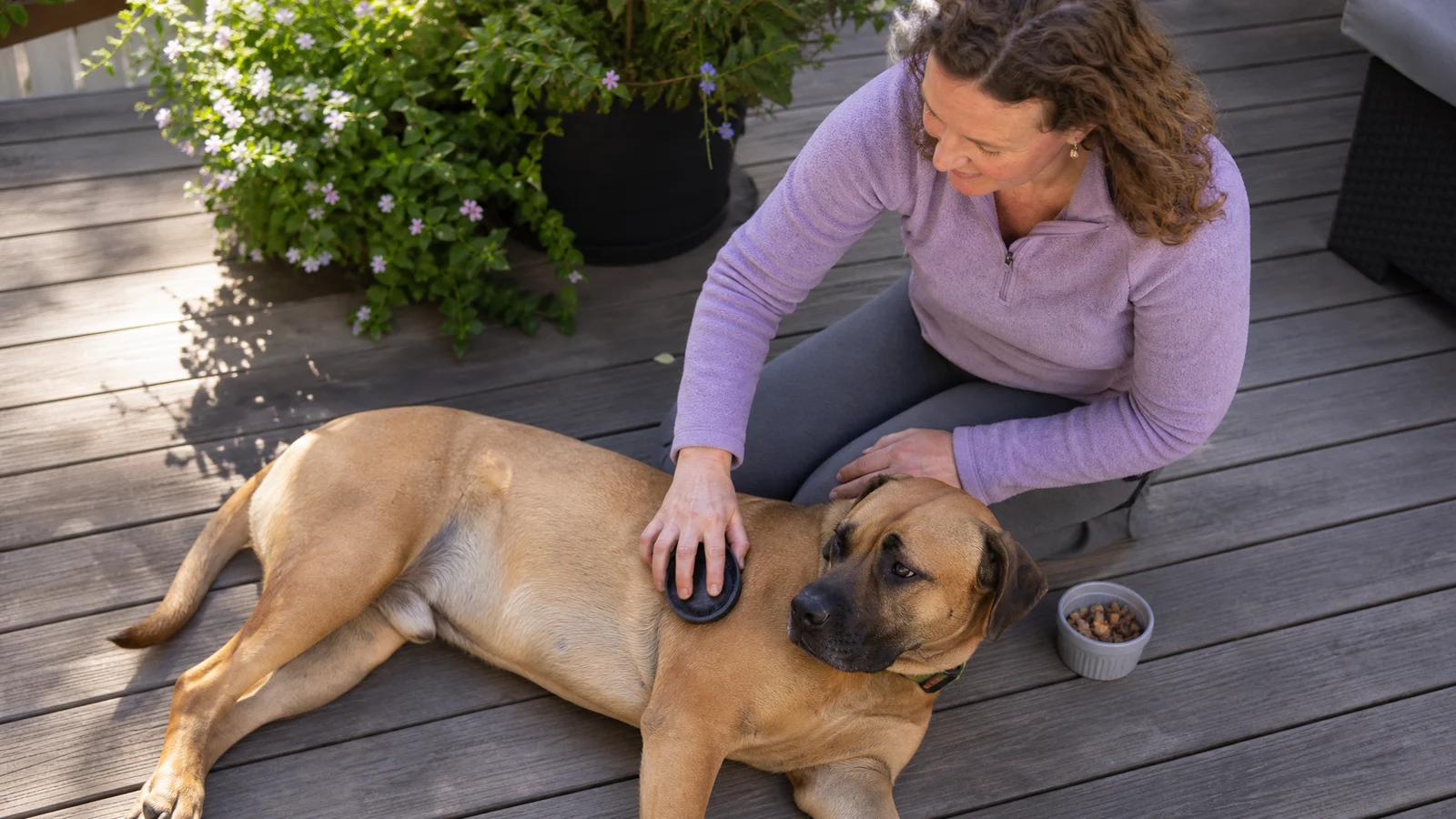 CareBrush Time Without a Fight: Shedding and Grooming Cooperation
 BehaviorStop Destructive Chewing in a Black Mouth Cur
 BehaviorBlack Mouth Cur and Cats: Teaching Calm Around Small Pets