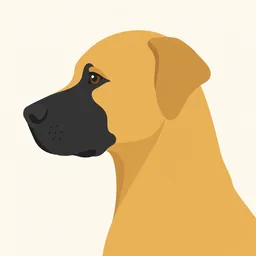
 Black Mouth Cur
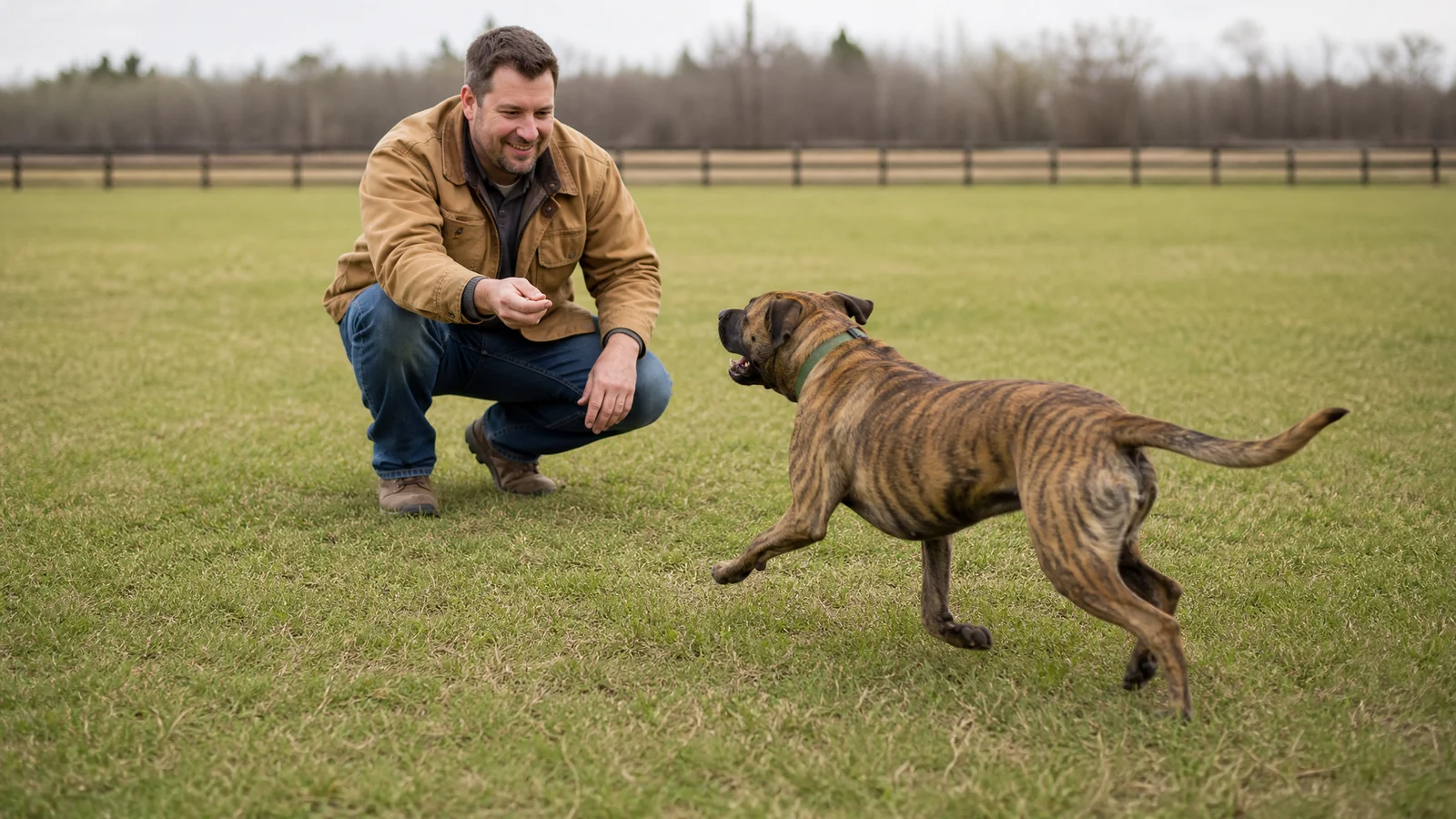
Pay far more for the return than the distraction pays for staying away, practice on a long line, and play recall games. Reward every arrival, however late it happens. The Black Mouth Cur is a fast, hard hunter who finds game with their eyes, ears and nose. A flicker, a rustle or a scent trail can outbid your voice in a second, and a dog built for that work will not be talked back by volume alone.
Below, you'll find how each sense pulls this dog away from you and the rewards and long-line steps that every other skill rests on, including household guides for apartment life, young kids, a second dog and long workdays, and how to tell whether your recall is improving or needs outside help.
Why Black Mouth Cur Recall Slips
Recall slips in this breed by design, not out of defiance. Each sense feeds the dog news about game, and they are built to act on it fast. The fix is motivation and management. Rewarding a late arrival keeps the return safe and valuable, so the next call has a better chance of working.
Distance problems often start when freedom arrives before the cue has been rewarded enough. Build a strong return before increasing range.
Sight
Eyes come first. A squirrel on a fence or a runner on the sidewalk can lock the dog in place, and a locked dog hears very little. Call early, while the head is still turning.
Moving things pull hardest. Practice with a rolling ball or a person walking past before you ever try wildlife.
Sound
Ears add a second pull. A rustle in dry leaves or a distant bark is enough to start the dog moving. Silent trailing is preferred in this breed, so a dog on the move may give you nothing to follow. That makes keeping the dog in view your safety net. Leave the line on until the cue holds against sounds you cannot control.
Scent
The nose is the strongest pull. A cold trail can hold a tenacious dog with great stamina far longer than a squirrel can, and the breed's strong desire to work keeps them on it.
The breed is described as very loyal to owner and family, and some advice says that bond is all recall needs. Bond helps, but a hot scent still beats it, so pay for every return and let sniffing follow as a reward.
Rewards for a Black Mouth Cur
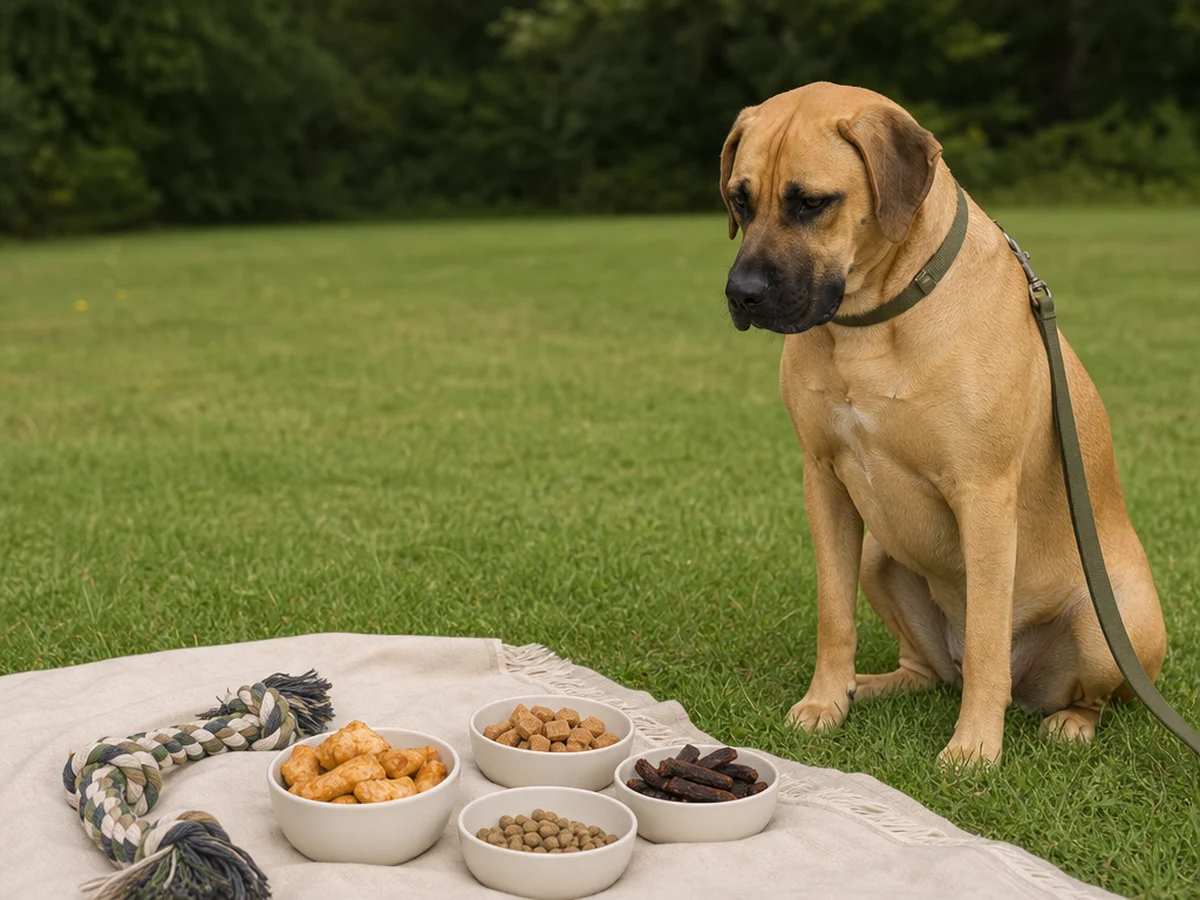
A reward must outrank whatever the dog is seeing, hearing or smelling, and the dog sets the ranking. Dry kibble may lose to a squirrel while warm chicken wins easily, so build a ladder before you go outside. The table below sorts rewards by pull. Test each one indoors, then in the yard, and note which makes your dog turn fastest.
| Tier | Examples | Use it for |
|---|---|---|
| Everyday | Kibble, dry biscuits | Quiet indoor practice |
| Better | Soft training treats, cheese bits | Yard work with mild distractions |
| Top | Cooked chicken, sliced hot dog | Long-line work and strong smells |
| Life reward | Release to sniff, a run, a game | After every good recall |
Keep the top tier for recall only. If chicken appears at every meal and every trick, it stops beating a rabbit trail.
Food and the Cue
Choose one cue word you use for nothing else, and add a wide, open arm as a signal. Hand signals for come keep control possible without words and make communication easier if hearing fades with age.
Say the cue once and mark the instant the head turns. Put the treat at your knee so the dog finishes the turn beside you, and hand over several pieces for a big effort. Repeating the cue teaches the dog that the first call is optional.
Play and Games
Dogs with a strong desire to work often love a fast tug game, and a short burst can beat food. End with a release to sniff, because freedom is itself a reward.
Two games build the habit. In restrained recall, a helper holds the harness while you run away calling, then lets go as you turn. In hide-and-seek, you slip behind a tree or door, call once, and pay well when eyes, ears and nose bring the dog to you.
Hide-and-seek suits the breed's tracking talent, since the dog gets to find you. Stop each round while they still want more.
The Long Line
Outdoors, a long training line gives the dog some freedom without a complete free range. Clip it to a well-fitted harness so a sudden sprint does not strain the neck.
- Hold the end of the line loosely and allow it to drag along the ground while the dog sniffs around.
- When the dog is looking away, give the cue once and step backward.
- Mark the turn, pay at your knee, then release the dog to sniff again.
- If the line goes tight, stop walking and wait for slack, the same rule used for stopping a dog from pulling.
The line prevents the habit of ignoring you from being rehearsed. If the dog does not come, walk to them, reward the contact and make the next try easier.
Recall in an Apartment
An apartment gives you short distances, echoing stairwells and neighbors behind every door. That makes it a good place to start and a hard place to finish, so begin inside where you control everything, then work down the stairs one distraction at a time.
Hallway and Stairwell
Use the hallway for distance. Stand at one end, call once, and pay at your knee. Then call from around a corner so the dog has to find you.
Stairwells add sound. Footsteps, a closing door and a dog barking on another floor make easy first tests, so practice while someone walks past and pay generously. Keep the dog on a short leash in shared halls. Our guide to leash training a Cur who pulls covers that part.
First Outdoor Trips
Take the first trips to the nearest patch of grass on a long line, at a quiet hour. Neighbors and their dogs are the main pull, so pick a spot where you can see them coming and keep your distance.
When another dog appears, call early, step back and reward the turn with the top tier. If the dog cannot look away, add distance instead of volume. Let them sniff only as a release after a good return.
Recall With Young Kids
Young kids shout, run and flap their arms, and each of those can pull a fast dog toward the action or send them racing off. Recall in this house needs rules for the children as much as for the dog.
Kid-Proof Cue Rules
Settle these rules before the first outdoor session. Keep them consistent every time you practice.
- Only adults use the recall cue at first, so it is never spent on a dog who is mid-game with a child.
- Children never chase the dog to make them come, because chasing turns recall into keep-away.
- Anyone who says the cue must have a treat ready and be willing to pay for the return.
- Kids stand still with arms down while a call is happening.
Loud voices matter too. Some dogs get more wound up by high-pitched noise, and turning quietly away or giving a few minutes to settle works better than adding more noise.
Child-as-Helper Games
Children can help once the cue is solid indoors. In the statue game, the child freezes with a treat held low, an adult calls, and the dog comes to the adult first and then earns the child's treat. Older kids can sit on the floor a few steps apart from an adult. Each calls the dog in turn and pays the arrival, and everyone stays calm.
Keeping Chaos on a Line
Leave the dog on a trailing line during yard play and whenever friends visit. You can grab the end if the game spikes, without a chase. A rest resets a wound-up dog. Our walkthrough on crate training a Black Mouth Cur shows you how to turn the crate into a spot they choose on their own.
Recall With Another Dog at Home
The other dog can be the most interesting distraction at home. They bring play, toys and a ready-made reason to stay put, so the Cur's recall has to compete with a friend.
Separate Turns
Work with one dog at a time. Settle the other dog with a chew behind a gate, or in a different room, and run the whole routine with the dog whose turn it is.
Alternate turns so neither feels left out. Training alone builds the cue without an audience that can join in.
Paired Recalls
When each dog is reliable alone, call both. Start with a dog's name so only that dog is paid, and stand with treats ready on each side. If one dog is slower, pay the one who arrives and let the other try again without comment. Keep both on lines outdoors until each turns on the first call.
Trading Attention for Treats
A call interrupts the best game in the house, so make the trade worth it. The Cur gets your attention and a top-tier treat, then a quick release back to play. When coming back never ends the fun, the dog stops resisting it. Our guide to training a Black Mouth Cur without fighting their drive covers the wider picture.
Black Mouth Cur Workday Recall
An owner who is out all day returns to a dog with energy stored up, and recall in that state is weak. A short routine, a helper at midday and a longer weekend outing keep the cue sharp without long sessions.
The Evening Routine
Practice before dinner, when the dog is keen. Run a few indoor calls, a few on the line in the yard, and finish with one game of hide-and-seek.
Stop while the dog is still eager. Short, bright sessions every evening beat one long weekend push.
A Lunchtime Helper
A neighbor or sitter can add a few cue-and-treat repetitions at midday. They must use the same cue word, the same hand signal and a pouch of top-tier treats. The helper never calls unless they can pay for the return. A call that goes unpaid trains the dog to ignore the word.
Weekend Outings and a Cue That Lasts
Plan one longer outing on the long line in a safe place away from roads. Let the dog use their nose, call a few times, and release them back to sniff after each return.
Keep the cue from fading by using it only when you can reward the arrival. Never use it to end fun with nothing to follow, or to start something unpleasant like a nail trim. For those, walk to the dog.
Recall Signs and Pro Help
Progress shows in the dog's body before it shows in distance. Watch how quickly they turn and what they do with a distraction in view. The table below compares working recall with signs that call for a trainer or behaviorist. Compare it with your dog's response today.
| Signs it is working | When to call in a professional |
|---|---|
| The head snaps around at the cue. | The dog ignores the cue even in a quiet room. |
| They make eye contact on the way in. | They bolt after game and cannot be turned on the line. |
| They return past a distraction they once followed. | They stall, freeze or fixate and stop responding to food or toys. |
| They take the treat and bounce back to play. | They shy away or look fearful when called. |
A Black Mouth Cur lives by eyes, ears and nose, so recall is built by making your voice the best news in the neighborhood and keeping the line on until it is. Pay every return, manage the setup, and keep the games bright. Add regular vet visits, because a change in hearing or vision can look like ignoring you. When the turns are quick and happy near the things that once pulled them away, the work is paying off.
 BehaviorStop the Jumping: Greeting Manners for Your Black Mouth Cur
 CareBrush Time Without a Fight: Shedding and Grooming Cooperation
 BehaviorStop Destructive Chewing in a Black Mouth Cur