 Black Mouth Cur
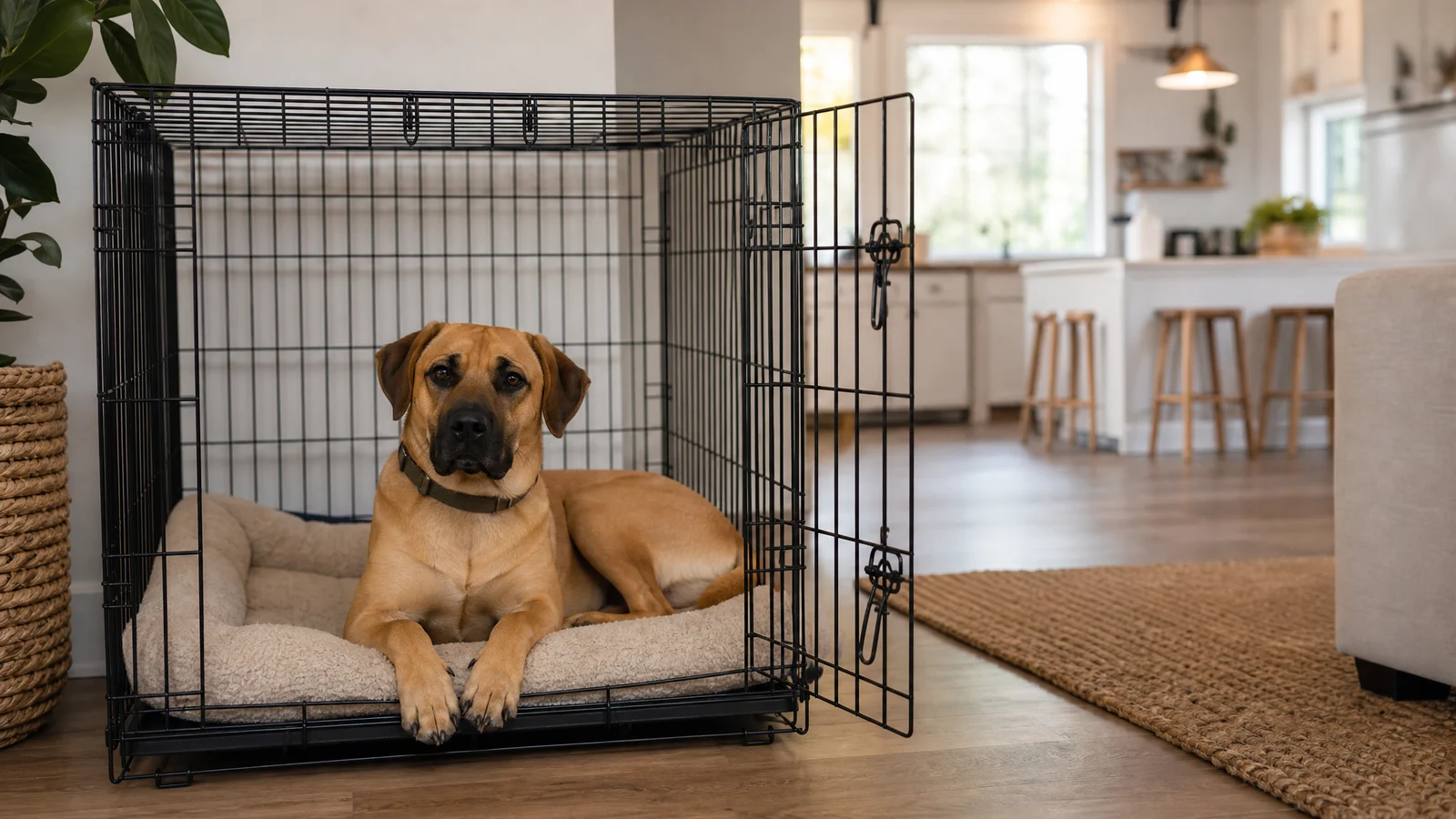
Does crate training prevent separation trouble in a Black Mouth Cur? Not by itself. Resting behind a crate door while a person cooks does not show how the dog feels after everyone leaves the home. Confinement comfort and comfort with absence are different skills.
The distinction matters for a breed described as very loyal to owner and family, with tenacity and a strong desire to work. Those traits do not prove that an individual Cur will struggle alone, but they make it sensible to teach independence deliberately instead of assuming a secure crate has solved it.
This article looks at crate training beside absence training, so you can build each skill, combine them only when the dog is ready, and recognize when the plan needs to change. The goal is not silent endurance. The goal is a dog who remains genuinely comfortable.
Black Mouth Cur Crate Training Has Two Skills
Crate training answers a place question: can the dog relax in this enclosed space? Absence training answers a relationship question: can the dog stay settled when a particular person is unavailable or leaves? Closing the crate and leaving tests both questions at once, which hides the source of difficulty. The breed description pairs loyalty and protectiveness with a strong wish to work. We use that information cautiously.
It supports giving the dog clear, rewarded routines with you, while also teaching that quiet time apart is safe and predictable. Run the two lessons on separate tracks at first. Practice the crate while you remain nearby, and practice tiny changes in availability while the dog is loose in a familiar, safe area. When both tracks look easy, you can decide whether combining them helps this dog. This separation also makes setbacks easier to read.
If the dog rests in the crate until you move toward the exterior door, absence cues need work. If they worry when the crate door moves while you stay seated, confinement is the current lesson. A clear reading prevents you from adding time to the wrong skill. The complete Black Mouth Cur training guide develops the reward and settling skills that support both tracks.
Crate Training Builds Confinement Comfort
A crate begins as furniture, not a test. Place it where household life is visible without constant traffic, keep the door secured open, and let the dog investigate. Food, a familiar resting surface and calm attention can make voluntary entry worthwhile without trapping the dog there. Reward looking toward the crate, stepping inside and remaining there briefly. The reward principle is simple: behavior followed by food, toys or praise becomes more likely.
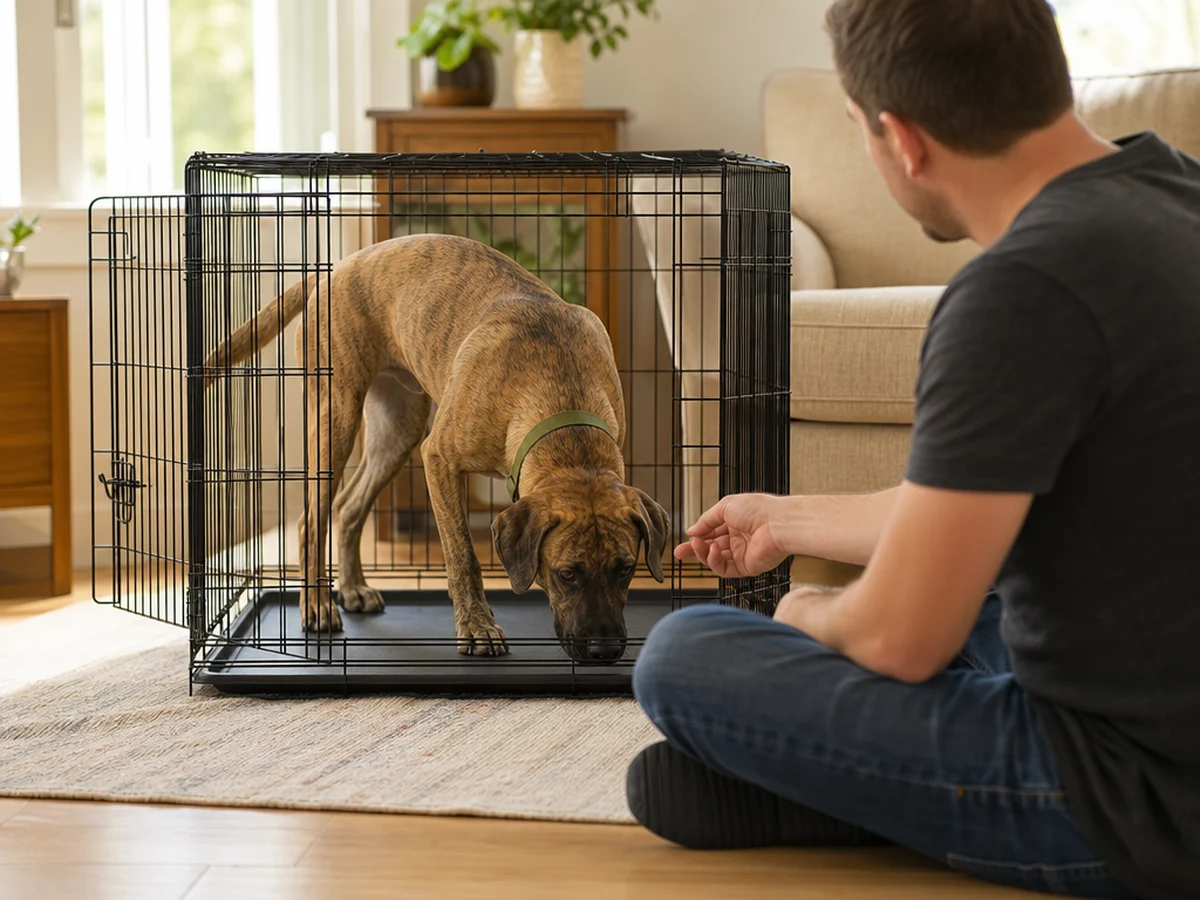
Choice Comes Before a Closed Door
Deliver rewards inside so the valuable location is clear, then let the dog come out before they feel urgency. Build the lesson in this order, returning to an easier step whenever the dog's body becomes tense. Each stage should look comfortable before the next one begins:
- Offer meals or scattered food just inside the open crate, with no attempt to move the door.
- Reward the dog for choosing to enter, turn around and rest while you sit nearby.
- Move the door a small amount, reward calm, and open it again before the dog asks.
- Close the door briefly while you remain visible and occupied with something quiet.
- Stand, move around the room and return while the dog continues to rest comfortably.
The clock advances only after the picture stays soft: loose muscles, normal breathing, interest in food and an ability to lie down. A dog who rushes the door or stops taking food is giving useful information. Make the next repetition easier rather than waiting for a larger reaction. Absence training starts before you leave the home. Teach the Cur that your movement does not always require following.
Alone Time Builds Absence Skills
Walk to the other side of a gate, return, and reward settled behavior. Later, move briefly out of sight while the dog remains in a safe room with an easy activity.
Departures Stay Below Concern
End a useful absence while the dog is still comfortable. ASPCA guidance says to reduce difficulty when stress appears instead of leaving a distressed dog through a complete departure. Progress may look modest at first, but the dog keeps rehearsing safety rather than panic.
Vary harmless departure cues outside the lesson. Pick up keys and sit down, put on shoes and make tea, or open the exterior door and close it without leaving. You are separating those signals from a long disappearance, then placing them back into carefully planned practice. Practice unavailability as well as physical distance. Sit behind a gate while reading, work briefly at a desk without interaction, or move around the room without inviting the dog to follow.
These ordinary moments teach that connection continues even when attention is not constantly available. Keep arrivals ordinary. Return while the dog is still settled, pause inside, and greet after the room feels calm. The return itself should confirm that short departures are routine, not turn every repetition into an emotional event.
Where Crate Training and Absence Meet
The two tracks may meet when the dog enters the crate readily, rests behind the door, and also handles you moving out of sight elsewhere. Try the combination at an easier level than either separate skill. A few steps outside the room may be enough for the first attempt. The crate is not automatically the best absence location. PDSA cautions against relying on confinement for separation anxiety unless a professional guides the plan.
Some dogs feel safer with more room, while others choose the crate as a resting place. Let observable comfort decide. Compare settings rather than guessing. Use a camera when you begin real departures so you can see whether the dog rests, scans, paces or fixes on the exit. If a safe room produces easier behavior than the crate, train absence there and keep the crate for rest while people are home. Do not use exercise to force sleep through an absence.
A suitable walk and sniffing can support calm, but exhaustion is not the same as emotional safety. The Black Mouth Cur temperament guide explains how the breed's drive and loyalty shape other training choices.
Read Crate Training Distress Before More Time
Brief alerting at a sound is different from sustained distress. Watch the sequence. A dog who notices the door, returns to food and lies down is processing the event. A dog who escalates, cannot eat, repeatedly targets the exit or never settles is not ready for a longer repetition. Vocal behavior needs context with this breed because the standard allows a loud voice in certain working situations. Sound alone does not tell you whether the dog is distressed.
Pair it with movement, breathing, food interest and recovery, then compare what happens in the crate, a room and when a person remains home. Use the camera record as a sequence rather than a score. Note what happened just before the first change, whether the dog could return to a calm activity and what ended the concern. That sequence tells you which departure cue or confinement step needs to become easier next time.
Pause the plan and seek help when the following patterns appear. They show that ordinary progression is not the next task:
- Pause when escape attempts could cause injury or confinement makes the response sharper.
- Step back when distress continues through very short practice or departure cues stop the dog from eating.
- Seek help when a small change repeatedly collapses progress despite easier repetitions.
- Arrange a veterinary visit when behavior changes suddenly, then review the training setup as well.
A veterinarian can check for health factors and help direct you to a qualified reward-based behavior professional. Keep regular veterinary visits even when training is progressing, because comfort and behavior cannot be separated cleanly from the dog's physical condition. A setback is evidence that one part of the picture became too difficult.
Repair a Black Mouth Cur Crate Setback
Perhaps the door stayed closed too long, the household added departure cues, or the dog entered the crate after a highly arousing event. Identify the changed ingredient before repeating the same setup. Reset the crate without also testing absence. For several sessions, leave the door open, provide valued activities inside and let the dog exit freely. Then rebuild only the door movement while you stay close.
This protects the contrast between a comfortable enclosure and a person leaving. Use this repair sequence rather than trying to recover lost ground in one session. The order separates comfort from absence again: Restore voluntary entry and relaxed eating with the door secured open, then practice door movement separately from time, distance and departure cues. Reintroduce movement in the room before going out of sight.
Test absence in the setting where the dog was previously most comfortable. Record what happens so the next increase follows the dog's behavior rather than a hoped-for result. A tenacious dog may repeat the behavior that previously opened the door or brought you back. That does not make the dog manipulative. It means the lesson became unclear. Reward the calm behavior you want at an easier level, and the new pattern can become dependable.
Black Mouth Cur Crate Training Goal
Success on the crate track is easy to describe: the Cur chooses to enter, rests with the door closed, stays responsive and exits without rushing. Success on the absence track is separate: departure cues become ordinary, the dog can eat or rest after you leave, and recovery is quick when a small surprise occurs. Neither track needs to move on a fixed calendar. Repeat easy versions until the dog's behavior is boring, then change one feature.
If closing the door is new, keep your distance small. If stepping outside is new, use the familiar safe area rather than adding confinement at the same moment. Keep another person in the plan when daily life would otherwise demand an absence beyond the dog's current skill. Management prevents a difficult rehearsal while training catches up. It also keeps the dog from facing a leap that the careful practice sessions never prepared them to handle.
The finished skill is not simply a dog who tolerates being contained. It is a Black Mouth Cur who has learned two clear ideas: the crate is a comfortable place, and a trusted person's brief absence is manageable. Keep those lessons distinct, and combine them only when the dog shows that both are secure.
 Exercise and jobsHow Much Exercise Does a Black Mouth Cur Need? Plus Brain Games
 Training basicsHow to Potty Train a Black Mouth Cur Puppy
 Training basicsHow to Train a Black Mouth Cur Without Fighting Their Drive