 Black Mouth Cur
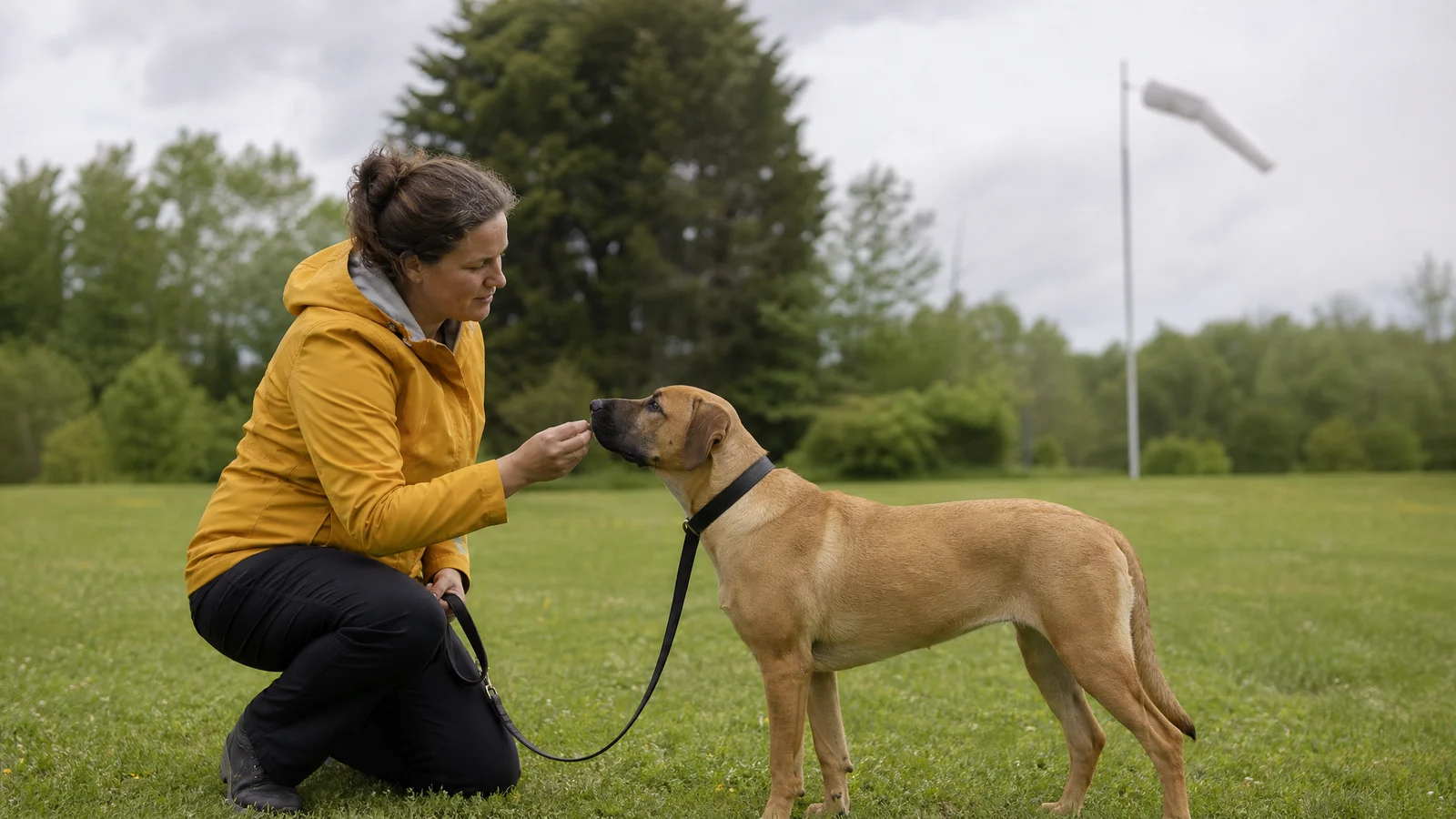
Standard advice says to flood a young dog with new sights and push through any hesitation. A sensitive Black Mouth Cur needs the opposite: slower pacing, softer hands and much more pay for every brave moment.
This guide covers building confidence in a Cur who looks tough and feels unsure, from the early signs of a worried dog to the slow, uneven years of growth, with overload triggers, gentle exposure, choice games and handling rules in between. We have spent many years specializing in this breed's behavior, and the pattern holds across dogs.
Mishandled, this sensitivity turns into shutdown, nonstop barking or snapping when cornered. Handled well, it becomes the attentive, loyal partner the breed was built to be.
Confidence Behind a Tough Look
A Cur plants their feet at the edge of a busy sidewalk, chest out, ears up, and passersby read pure confidence. Meanwhile the dog is working out where the exit is.
The breed standard describes a powerful, agile, medium-sized tree dog with tenacity, courage and a strong desire to work, so the rugged look is earned. It just says little about how the inside feels.
A common claim says a dog built like this can handle anything, so push on through. We doubt it, and the evidence sits in that same standard, which disqualifies extreme shyness.
Courage matters, but it is built from experiences that went well. A dog forced through a scary one learns only that scary things come with no way out.
A Range of Temperaments
Owners report a spread, not one temperament. Some Curs adore nearly everyone and lean toward every passerby. Others treat all strangers as a no.
Many are choosier: warier of men than women, uneasy with tall men who walk straight at them, or set off by hats, uniforms and delivery workers. A few ignore strangers outside and turn vocal at home.
The same goes for other dogs. A Cur who loves people may care little for dogs, and some resent a second dog in the house.
So skip the blanket plan to meet everyone. Your first job is detective work: find out which kind of dog you have, then map the triggers one by one.
Signs of an Unsure Dog
An unsure Cur often looks aloof or stubborn when they are really coping. Watch for these signs.
- They put their body between you and an approaching man, or angle themselves so you stay behind them.
- They stop and look to you before deciding about a stranger, then stay neutral or warm up once you give a relaxed go-ahead.
- They ignore people but bark at anyone who tries too hard to make friends or who talks to you.
- Yawning, lip licking or a sudden freeze shows up well before any growl.
- They seem fine in a crowd but tense when one person walks straight at them.
Treat each sign as a trigger to map and pair with calm, rewarded exposure. That works better than any vague plan to socialize widely.
Black Mouth Cur Overload Triggers
A young Cur who mouths wildly after a day of visitors, or a grown dog who barks until hoarse after a delivery truck, is not being bad. They have passed their limit. Overload is the point where treats and cues stop working, and your job is to keep the dog below it. Prevention costs far less than repair.

New Places and Crowds
New environments overload these dogs when everything arrives at once: strangers, smells, a short leash and no way to retreat. Some Curs cope in a busy park because nobody focuses on them, then fall apart when one person heads straight for them. Go at quiet times, park far from the entrance and leave while your dog is still doing fine.
In young dogs, overload looks like frantic biting and zoomies. Mouthing often climbs when a puppy is overtired or overwhelmed, so end-of-day chaos usually means a spent brain, not a bad puppy. Some owners also see a puppy wind up mostly when overdue for a wrestle with another big dog, so check play needs before blaming temperament.
Sounds and Home Alerts
Sudden noise is the classic trigger, but at home the bigger pattern is vocal alertness. Owners report barking at driveways, drivers and deliveries, and some describe a dog who bays or wakes them at night. Often these same dogs ignore strangers in public, which tells you the barking is about home territory, not about people.
Manage first. Put frosted film on the window that faces the driveway, or move the bed to a room away from the street. Teach a settle spot with a chew and reward the first pause in barking. Our guide to Black Mouth Cur behavior problems and their instinct covers the drive underneath.
Pushy People and Rough Hands
Some Curs tense when a stranger leans over them, grabs a collar or reaches for the head. Others stay quiet until a person works too hard to befriend them, especially when you are not close. Loud voices, looming bodies and grabbing hands all tell a soft dog the same thing: this is not safe.
Some owners link triggers like hats or uniforms to a bad early experience. Whatever the cause, one pushy greeting can undo weeks of progress. Stand between your dog and the stranger, and politely decline the petting.
Confidence Through Gentle Exposure
A dog who eats chicken happily across the street but spits it out at the door has just given you a measurement. That distance is your starting line, and gentle exposure means working there and closing the gap slowly. The popular plan of flooding a puppy with everything gets this backwards for a sensitive Cur.
Stay under threshold, meaning your dog can still eat, look away and recover. If they stop taking treats, you are too close. Keep sessions short and end on a win. When the trigger appears, treats flow. When it leaves, treats stop, so your dog learns the trigger predicts food.
Places
Start where your dog is comfortable: the far edge of a parking lot, a quiet sidewalk, a store entrance at an off hour. Let them watch, feed for calm looking and leave before they tire. Change one thing per visit, such as more people or a closer door, and repeat each spot several times before moving on.
Sounds
Pair everyday noises with food at a volume your dog barely notices: a doorbell recording, a truck door, a knock. Raise the volume only after they stay loose and curious. For real deliveries, toss a handful of treats on the floor as the truck pulls in, and use your marker word when they glance at the noise and then back at you.
People
People are where Curs differ most, so test rather than assume. For guests, use a leash or gate at first, then follow this order.
- Ask the visitor to ignore your dog completely: no talking, no eye contact, body turned slightly sideways.
- Let your dog approach on their own. If they touch the visitor's hand, mark and give a treat.
- If they hold back, toss treats near the visitor's feet and let your dog decide how close to come.
- If they stay tense, send them calmly to the settle spot and try again another day.
For men in hats or uniforms, recruit a friend to stand far away in the gear while you feed treats. Ask tall men to angle in from the side. Skip the advice to have strangers hand-feed right away. Many Curs read an outstretched hand as pushy, so let your dog take treats from you first, then from people they pick.
Choice Games for a Black Mouth Cur
Some Curs size up a stranger and glance at you before deciding what to do. That glance is an opening. Choice-based games let your dog pick between approaching and retreating, which teaches what pressure cannot: they are allowed to leave, so they have no need to fight or freeze.
Scatter and Sniff
Toss treats into grass and let your dog roam. Sniffing is a calm, absorbing job, and if something worries them they can walk away while you follow. Use this near mild triggers at a distance, such as a quiet street, to build the habit of staying loose in new places.
Approach or Retreat
At a comfortable distance from a calm person or object, pause and wait. When your dog steps toward it, mark and treat. When they turn away, follow and reward that too. Both answers pay, and that is what makes it a real choice.
Add a look-at-that game: when your dog notices a trigger, say your marker word and feed. Noticing without reacting becomes the habit.
Choices Around Other Dogs
Choice matters most with other dogs. Some owners report leash reactivity toward larger or intruding dogs, even in dogs who are fine at the dog park. Walk parallel at a distance your dog likes, skip nose-to-nose greetings on leash and introduce a new housemate on neutral ground.
Don't let dogs simply work it out. A few owners saw puppy play harden into hostility as the dog matured. If play gets rough, take a short pause of 10 to 20 seconds, then let play restart. Your dog discovers that soft play keeps the fun going, while a painful bite ends it.
Confidence During Handling
Owners of sensitive Curs describe the same moments: a dog who ducks when a hand comes over the head, goes stiff on the grooming table or shuts down after a sharp word. That is not defiance. Rough or hurried handling teaches a soft dog to brace for every hand, so handling is part of confidence work.
Grooming and Vet Visits
Practice below your dog's threshold every time. If you see a yawn, a tight mouth or repeated lip licking, drop back to an easier step. Break brushing, nail trims and ear checks into tiny pieces: touch, treat, show the tool, treat.
Reach under the chin or toward the chest, not over the head. Handle for seconds and pay after each touch. Schedule regular vet visits, and rehearse the exam at home with the same touch-and-treat steps so the clinic feels familiar.
If your dog may ever need a muzzle, start muzzle training with rewards well ahead of time. A muzzle introduced without that groundwork can frighten your dog and make each later try harder.
Leashes and Tone of Voice
On leash, keep it slack. A tight leash and tense hand tell a worried Cur that you are worried too. When a trigger appears, turn and create distance, feed treats and move on rather than hold your dog in place.
Keep your voice low and even. A shouted word lands on a soft dog as a threat and often ends the lesson. Redirect with a cheerful cue and reward the right choice. Sensitive Curs improve fastest with a calm, consistent person, and harsh tones buy nothing here.
Soft Dog Confidence Over Time
Expect a long road. Early gains look small: your dog takes a treat at a spot that used to be too close, or recovers from a startle in seconds instead of minutes. Our Black Mouth Cur puppy training timeline shows how the early stages usually unfold, and confidence work fits inside it.
Setbacks are normal. A scare, a move, a house full of guests or adolescence can bring old wariness back for a while. Drop to easier distances, shorten sessions, and progress usually returns faster the second time. A quiet evening routine helps too, as in winding down after work. These signs show your dog is gaining ground:
- Your dog recovers quickly from startles and returns to treats within seconds.
- They glance at a trigger, then back at you with a soft face.
- They approach new people on their own terms and may take treats from a few chosen ones.
- At home, they give a bark or two at a delivery and then go to their settle spot.
- They sleep through the night without baying.
Over the long term, expect slow gains, occasional dips and then a settled adult. The breed was bred for stamina and is described as loyal and protective of family, and in a confident dog the sensitivity turns into attentiveness.
They read people accurately, check in with you and stay close. Some will always prefer a few people and a quiet house, and that is fine. Keep the pace slow and your hands and voice gentle, and the dog under that tough look becomes a steady, trusting companion.
 BehaviorBlack Mouth Cur: Gentle play with kids
 Training basicsTeaching a Black Mouth Cur to Come When Called
 BehaviorStop the Jumping: Greeting Manners for Your Black Mouth Cur