 Black Mouth Cur

The breed standard describes a dog bred for stamina with a strong desire to work, and it disqualifies extreme shyness. The usual puppy advice follows from that: tire the dog out, socialize widely, and trust a willing worker to settle in.
Owners report something messier. Many Curs love everyone, others distrust every stranger, and plenty are wary only of particular people, such as tall men, hats or delivery drivers. Some turn confrontational with other dogs as they mature. A plan built around your household beats one built around an age chart.
Below, we walk through the first weeks in a small apartment, a house with young children, and a home with a resident dog and a long work day. Then we cover the years after age two. We have trained this breed for a long time, so every plan here is practical.
Black Mouth Cur Puppy Training Timeline for Apartments
An apartment doesn't rule out this breed, but it changes who supplies the work. The standard gives only mature minimums (18 inches and 40 pounds for males, 16 inches and 35 pounds for females), so skip the size guessing and plan around stamina. In a small space, you invent the jobs.
Build the first weeks around your front door. Carry your puppy out for potty trips, pay the moment they finish, and keep the route identical so the hallway, elevator and stairs turn boring instead of thrilling.
Your building doubles as a socialization course: neighbors, carts, packages, slamming doors. Skip the "meet everybody" approach. Watch who your puppy tenses around, whether that is a tall man approaching head-on, a hat, a uniform or a delivery worker, then pair each one with distance and a treat. Many owners find this works better than general socializing, because wariness in these dogs often attaches to specifics.
- Scatter part of each meal across the floor so sniffing becomes the job.
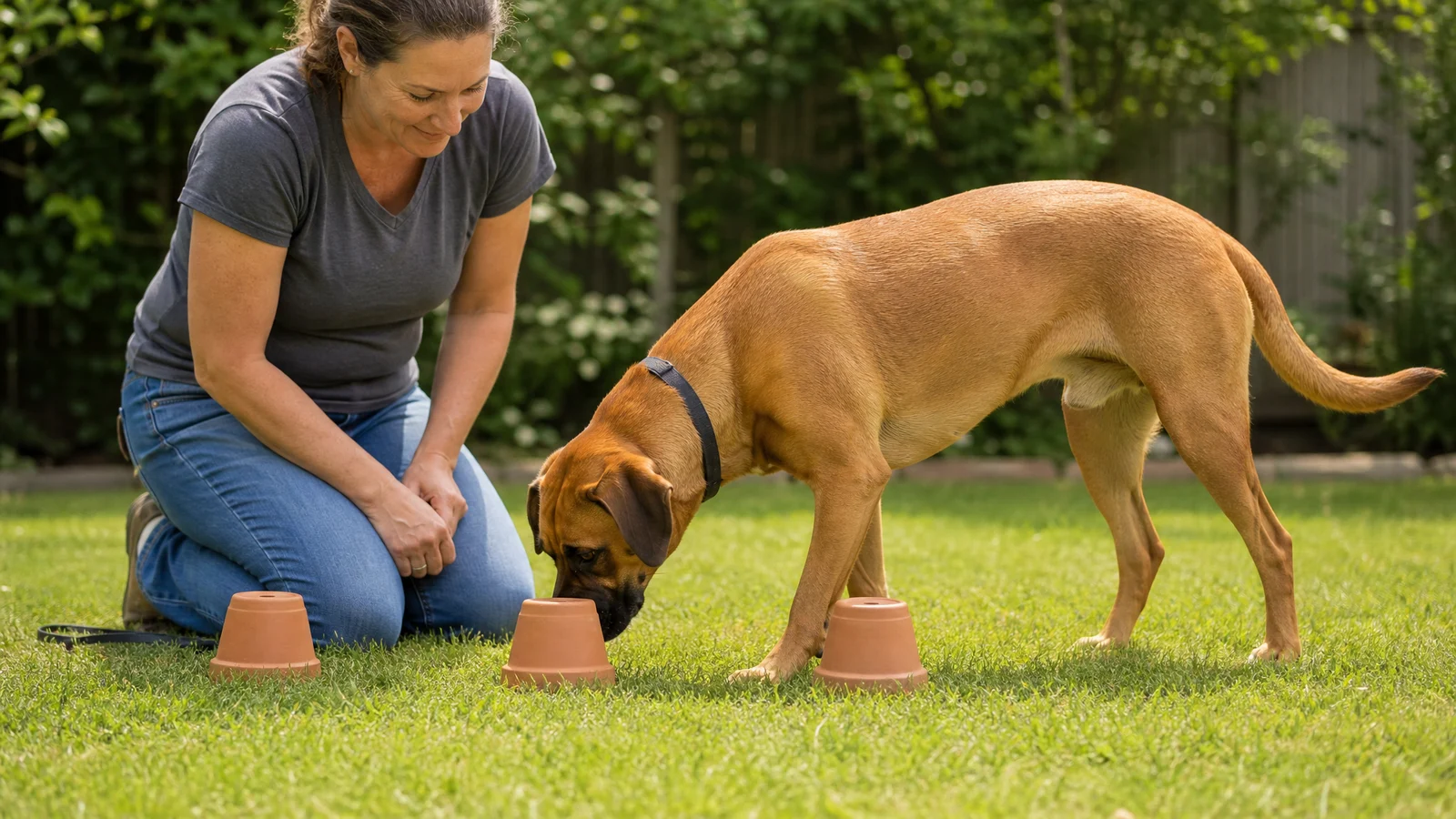
- Set out a row of open boxes and bait at least half with smelly treats, so your puppy finds them and rewards themselves.
- Teach a mat settle early and pay generously for quiet.
- Rotate chews and puzzle toys so nothing goes stale.
Noise needs a plan too. A few owners say their Cur ignores strangers outside but turns vocal at home, barking at footsteps or deliveries. Reward the first alert, then reward quiet on the mat. For a wider look at how trainable they are in tight quarters, read Black Mouth Cur temperament and trainability.
Puppy Training Timeline With Young Kids, Week by Week
Playful mouthing is normal for a puppy, so expect teeth on small hands and sleeves for a good while. A working-breed puppy and children can get along well, but only when an adult runs every session.

Handle bite inhibition yourself. When teeth press hard, play stops, calmly and briefly. Hand over a chew, and restart the game once the mouth is soft. Overtired puppies mouth more, so schedule naps behind a gate where little hands can't reach.
- Children stay low and still, and the puppy decides whether to visit. No carrying, hugging or chasing.
- Treats go on a flat palm or the floor, never dangled high.
- Everyone leaves the puppy alone while they eat, chew or sleep.
- The pen is the retreat, and nobody reaches in.
Run visiting guests the same way. If your puppy seems nervous, ask people to ignore them, let them wander over and touch a hand, then pay. That calm, dog-chooses approach also suits wary adult guests later.
Stay reward-based all the way through. Reward-based methods only is the position of veterinary behaviorists, and it suits a house with kids, since a puppy who trusts people has less reason to push back. As adolescence brings size and protectiveness, supervision stays on the schedule.
Black Mouth Cur Puppy Weeks With a Resident Dog
Introduce the two dogs on neutral ground first, with a parallel walk before any face-to-face time. After that, run the first weeks like a timetable: short shared sessions, separate time for everything else.
Introductions and Separate Training
Train each dog alone, and give the older dog some sessions too so they don't feel replaced. Feed apart and give chews in different spaces. Some owners with a much smaller senior dog separate the pair the moment the puppy gets wound up and starts pestering. That habit prevents most trouble.
Watching for Trouble
Don't leave dogs to work it out. Some Curs don't back down from dogs who start trouble, and a few owners say playfulness turned hostile over time. Learn the early signs: stiffening, staring, or play that stops being mutual. Step in then, and reward calm disengagement before the habit sets.
Some dogs shift from playful to hostile over time, so keep supervising and separating resident dogs rather than assuming early peace will last. Some owners also see leash reactivity or territorial reactions toward other dogs, even in a dog who is fine at boarding or the dog park. The instincts behind these behaviors are worth understanding.
Copycat habits are the other risk. If the resident dog barks at the door, your puppy will join the chorus. Train the door routine with the older dog on a mat or behind a gate while the puppy watches calm behavior get paid.
Puppy Training Timeline for a Long Work Day
If you are out all day, the schedule has to do the training your hours can't. A young puppy can't be alone for long, so line up a midday visitor, walker or neighbor for the early weeks. Keep regular vet visits on the calendar to track growth.
Make the day predictable. Do a potty trip and a short training session before you leave, set out a puzzle feeder or scattered meal, and leave your puppy with a chew in a pen or crate they already love. Come home calmly, take them out first, and greet them once they settle.
Build independence in small steps. Start with seconds of separation while you are home and stretch the time as your puppy stays relaxed.
Dogs alone most days can miss the exposure the early weeks depend on, so protect evenings and weekends for outings and trigger-pairing work. Come adolescence, the stamina shows up: add a proper walk before work, a nose-work game at night and a midday break. Our full training guide covers how to channel that drive.
Black Mouth Cur Training in the Years After Two
Two years is a checkpoint, not a finish line. A dog bred for stamina keeps needing jobs, and the standard expects a working dog in hard, muscular condition. Keep exercise and mental work in the weekly plan: nose games, new tricks, long walks and sniffing time.
Expect the personality to keep showing. Some owners report that a well-socialized dog became somewhat less friendly with people as they matured, so keep the trigger map current. Some owners also see home-territory barking even in otherwise friendly dogs. Keep a set greeting routine for guests. Wary dogs do well with a calm approach where they choose, and exuberant ones do better on a leash with a planned introduction.
Keep your trigger map current and keep pairing each trigger with calm, rewarded exposure. If you ever see growling along with stiffness or avoidance, stop what you are doing, give the dog space, and talk with a reward-based trainer.
The early plan becomes upkeep. Practice the settle, the recall, the door routine and the dog skills a few minutes a day, and refresh them whenever life changes. Expect a dog who stays busy for a long time, and a Cur with clear jobs and a trusting relationship with you stays steady for the long run.
 Exercise and jobsJobs and Sports for a Black Mouth Cur's Working Drive
 BehaviorBlack Mouth Cur Behavior Problems and the Instinct Behind Them
 Training basicsCrate Training a Black Mouth Cur and Preventing Separation Anxiety