 Black Mouth Cur
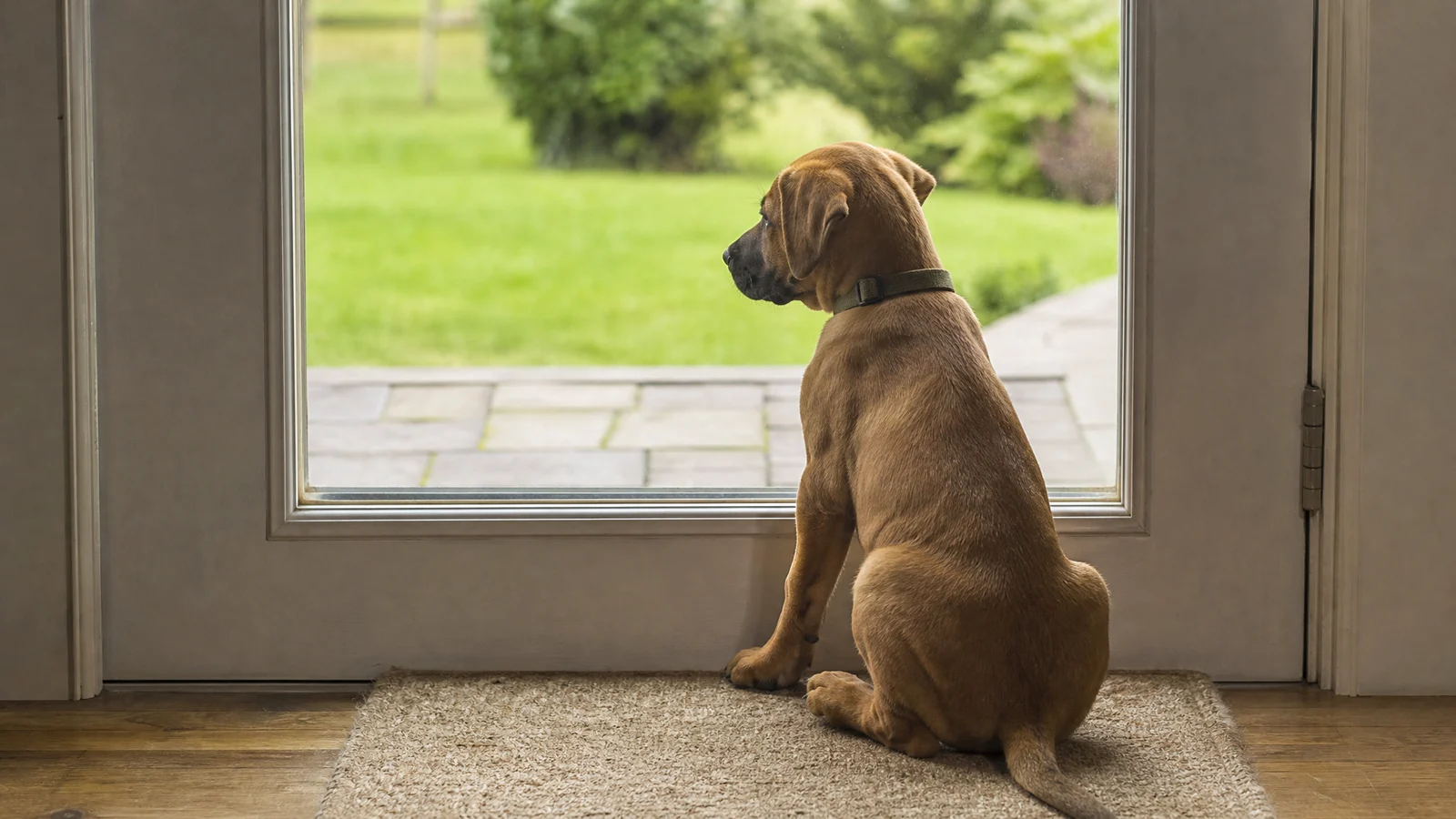
Alert and persistent, a Black Mouth Cur puppy may look ready to work while still having no idea that the rug and the grass follow different rules. Drive does not supply a house-training map. You must make the correct destination obvious and prevent the puppy from rehearsing another choice.
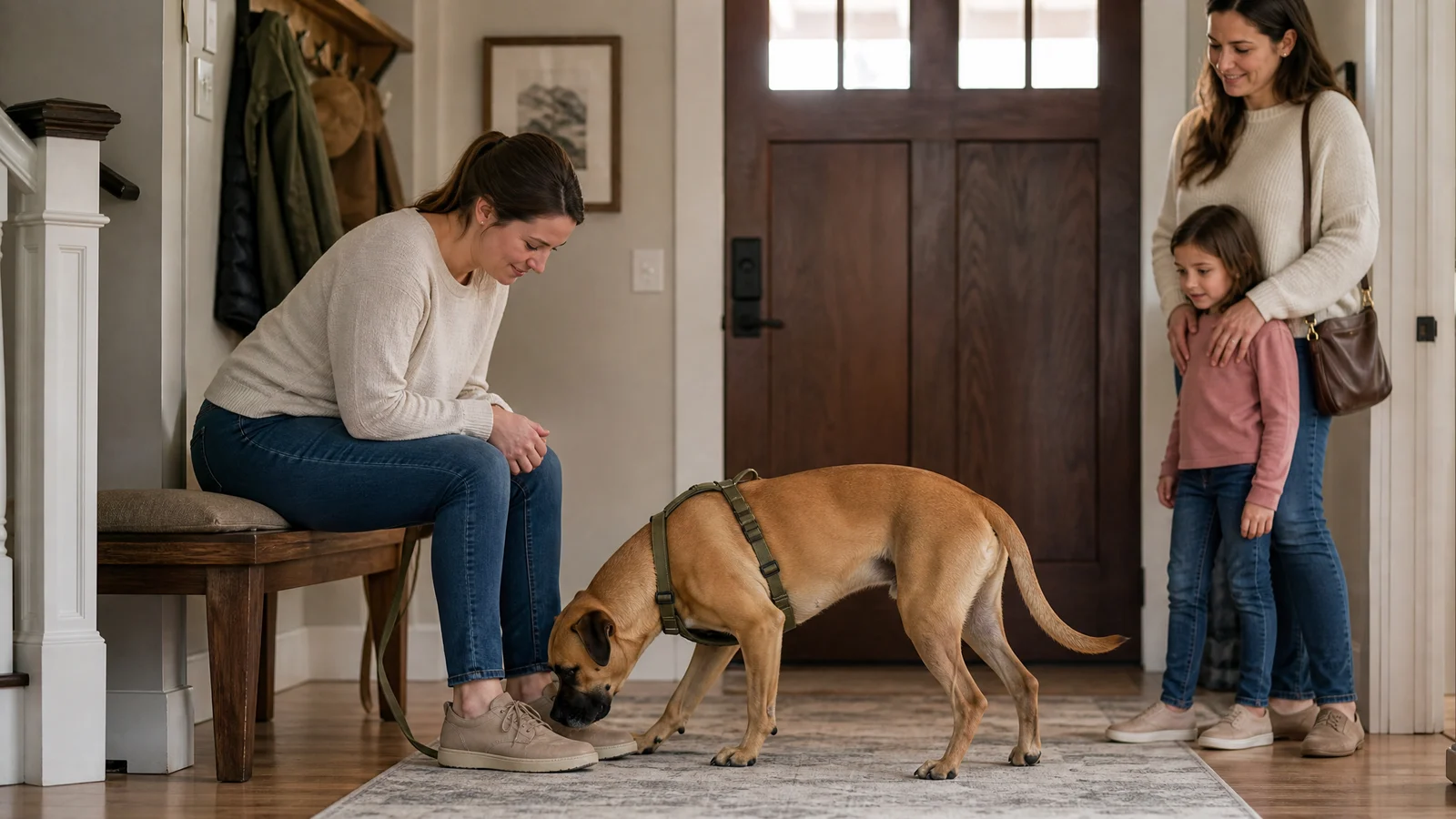
We organize potty training by rooms because each place has one job. The exterior door leads to the destination, the main room supports supervision, the utility shelf holds the record and cleanup tools, and the rest of the home opens only as reliability grows.
We'll walk you through destination, supervision, reward, record, cleanup and earned freedom as one connected toolkit. The method stays calm and reward-based, with no invented breed timeline and no assumption that a determined puppy can simply hold on longer.
Black Mouth Cur Room Map for Potty Training
The map begins with a single outdoor destination and a short route to reach it. Every extra choice adds ambiguity. Use the same exit, guide the puppy to the same appropriate surface, and remain quiet enough for sniffing and elimination to be the obvious task. A destination is more specific than outside.
Destination Is the First Tool
Humane World recommends using one consistent spot, taking the puppy there on leash and pairing the act with a cue. Consistency links a location, surface and routine before the puppy understands the cue itself. Choose a place you can reach in poor weather and at inconvenient hours. Keep the leash relaxed, limit wandering, and let the puppy finish before you move.
A fast, agile Cur can turn a trip into a tour of the yard, so separate the potty task from play at first. Keep exploration as the reward that follows the completed job.
The Route Prevents Detours
The route from resting area to destination should contain as few opportunities for accidents as possible. Carry a very young puppy if needed, or move directly on leash without stopping to greet people, investigate rooms or chase a toy. The enjoyable activity can begin after success outside. Everyone in the home should use the same exit and cue. That structure is not harsh.
The reward-based position allows routines and guidelines, provided they are taught without fear or pain. Clear repetition is what gives the puppy a solvable job.
Potty Destination and Exit
The exterior door is a transition point, not the place to begin looking for supplies. Keep the leash and waste bags ready, and know where you are going before you open it. Swift, boring departures reduce the chance that excitement pushes the actual purpose out of the puppy's mind. Give every caregiver the same simple setup.
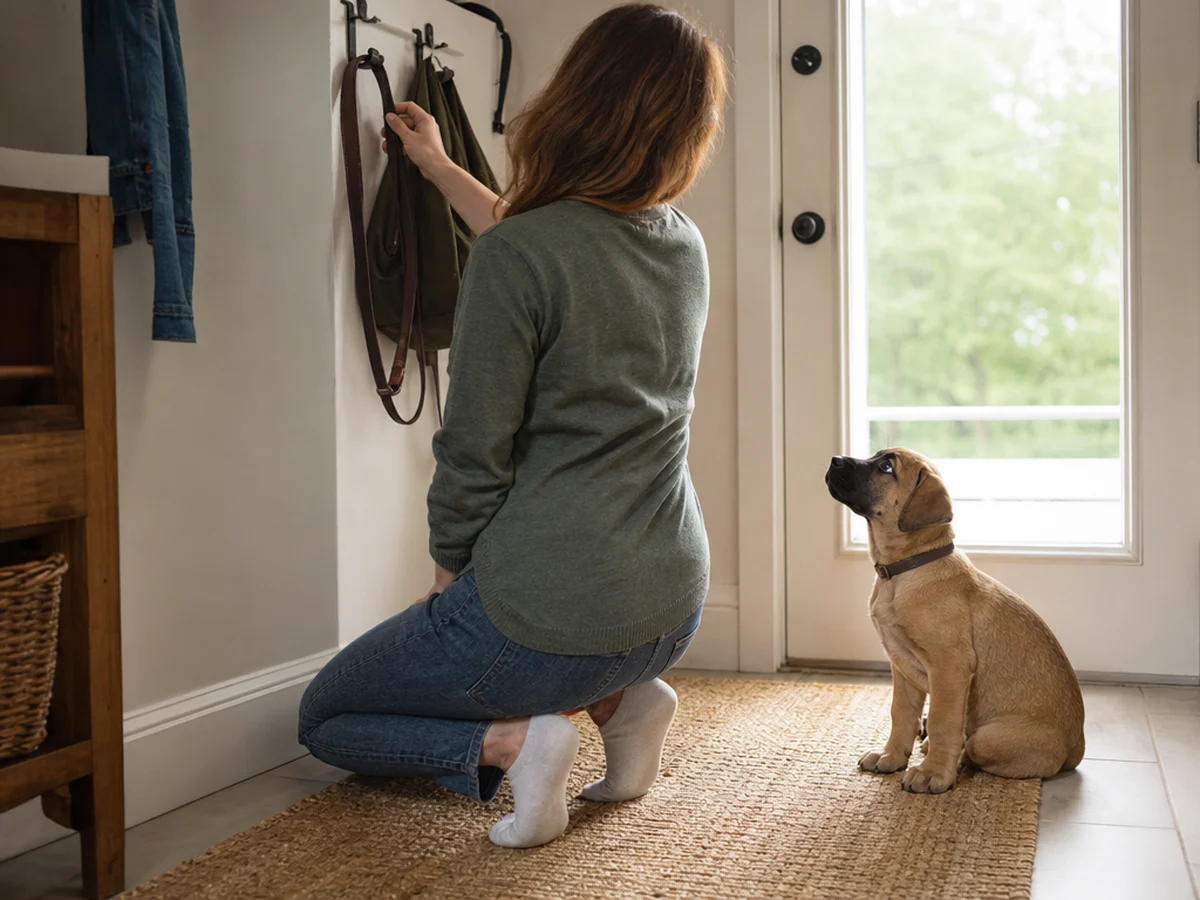
The Exit Holds the Kit
The leash hangs in one reachable place, bags stay beside it and outdoor shoes do not need to be found after the puppy wakes. Removing household delay is a training tool because the correct destination becomes available before sniffing or circling turns into an accident. Timing decides what the puppy learns. Mark with warm praise as the puppy finishes, not after you are back indoors.
Reward at the Finished Act
Humane World supports rewarding immediately after completion, while Battersea cautions that food can lead some dogs to offer small pretend squats for payment. Those sources support a practical choice rather than one universal rule. Start with calm praise and a valued life reward, such as permission to sniff or play.
If you use food, deliver it only after a clear, complete elimination. If the puppy begins offering empty squats, return to praise and outdoor freedom. A Black Mouth Cur's desire to work can make the sequence useful: destination, finish, marker, then access to something enjoyable. The puppy learns that the efficient route to exploration runs through the correct behavior. Returning indoors immediately every time can accidentally make success end the outdoor fun.
The Door Signal Comes Later
A bell, sit or nose target at the door can become a useful signal, but teach it after the destination pattern is strong. Otherwise the puppy may learn that touching the door opens the yard for entertainment. First make the outdoor act reliable, then name the request. When you add a signal, prompt it just before a trip you already expect to succeed.
Open the door promptly, follow the established route and reward after the puppy finishes. Over time, pause briefly at likely moments so the puppy has a chance to offer the signal without help.
Supervise Potty Training Indoors
Supervision means knowing what the puppy is doing, not merely sharing an address. Keep the puppy in the room with you, use gates to reduce hidden corners and interrupt your own activity often enough to notice sniffing, circling, sudden wandering or a break from play.
Active Supervision Has a Plan
Potty trips belong after predictable transitions: waking, eating, drinking, active play, training and a change from busy behavior to wandering. The exact interval varies by puppy. Use the transitions you can see rather than relying on a breed-based bladder formula that the evidence does not supply. Set up the main room so action is easy.
The following checks keep supervision active instead of accidental: Keep the puppy within sight and close enough to guide toward the exit. Gates should block bedrooms, hallways and unseen accident spots, while the leash stays at the door instead of disappearing when circling begins. Take the puppy out after major transitions and record what happened.
Hand supervision to another adult explicitly rather than assuming somebody is watching. A named caregiver closes the most common gap in a busy room. A short indoor leash can help keep the puppy near you while you move through the room, provided it is supervised and cannot catch on furniture. The purpose is proximity, not restraint.
Reward calm following and offer appropriate rest when the puppy becomes tired or frantic. Schedule changes are useful tests only after the routine is secure. During a busy evening, reduce access and assign one adult to the puppy instead of expecting established habits to survive without support. Management keeps a temporary disruption from becoming a new indoor pattern.
Confinement Covers the Gaps
When active supervision is impossible, use a safe pen, puppy-proofed area or a crate the dog has learned to enjoy. The space should prevent wandering without asking the puppy to wait beyond their current ability. Potty training and Black Mouth Cur crate comfort are connected, but neither skill should be forced to carry the other.
Take the puppy to the destination immediately after confinement and after sleep. Quiet nighttime trips should follow the same route with minimal play, then return the puppy to rest. Keep regular veterinary visits on the calendar, and ask your veterinarian about a sudden change in elimination or comfort.
Adolescence, weather changes, travel and household disruption can weaken familiar patterns. Return to the tools that create clarity: one destination, visible supervision, a well-timed reward, a current record and complete cleanup. The Black Mouth Cur temperament guide places consistency within the larger training picture.
Potty Training Records and Cleanup
The record and cleanup kit belong together because both turn accidents into information. Keep a simple log where every caregiver can reach it, and store appropriate cleaning supplies nearby. The log finds the timing gap, while thorough cleanup removes a location cue that can draw the puppy back. Write down waking, meals, drinks, play, trips, success and accidents in plain language.
The Record Finds the Missing Trip
You are looking for sequence, not a perfect diary. After several days, the record often reveals that accidents follow one missed transition or that a trip occurs after, rather than before, the puppy's limit. Use the table to turn each pattern into the next adjustment. The record should identify the gap before you change the routine.
| Record Pattern | Likely Gap | Next Change |
|---|---|---|
| Accident soon after play begins | The pre-play trip was missed | Visit the destination before active play |
| Success outside, then a small indoor accident | The puppy may not have finished | Wait quietly and allow another chance |
| Accidents appear in one hidden room | Freedom expanded before reliability | Close that room and rebuild supervision |
| Door signal appears without elimination | The signal may mean outdoor access | Use a brief potty route before play |
| A previously reliable puppy changes suddenly | Training may not be the only factor | Contact the veterinarian and review the routine |
Change one part of the plan at a time so the record remains readable. Add an earlier trip, reduce access or wait longer at the destination, then watch the result. Several simultaneous changes can produce success without showing which tool actually helped. If you catch an accident beginning, interrupt gently and guide the puppy outside. If you find it later, say nothing to the puppy.
Cleanup Protects the Map
They cannot connect your reaction to an earlier event. Clean the area thoroughly and ask what supervision or timing gap allowed it. Block access until the area is dry, then supervise closely there. Avoid turning cleanup into an emotional household event. Calm handling preserves trust and keeps the learning problem where it belongs: destination clarity, prevention and reinforcement.
Black Mouth Cur Potty Freedom
Freedom expands by evidence, not age. Open one new room after the puppy has shown a dependable pattern in the current area and has recently visited the destination. Stay with them in the new space, keep the first visits brief and return to the main room before supervision fades.
Bedrooms, carpeted rooms and distant hallways deserve separate trials because surfaces and distance change the picture. A puppy who is reliable beside the exterior door may not yet generalize the rule upstairs. Treat each room as a small extension of the map rather than proof that training is complete.
Setbacks shrink the map briefly. An accident in a newly opened room means freedom grew faster than understanding. Close that room, restore the previous supervision setup and add a destination trip before the next trial. This is a small adjustment, not a reason to restart every lesson.
Use this freedom check before opening another room. The answers should describe a stable pattern, not one unusually easy day. The checklist keeps that decision tied to evidence:
- The puppy has recently visited the destination and completed the usual routine.
- An adult can supervise the new room without splitting attention among other tasks.
- The route back to the exit is clear and the necessary supplies are ready.
- The current area has stayed reliable through waking, meals, play and rest transitions.
Long-term reliability looks quiet. The puppy uses the established route, eliminates promptly, signals when needed and settles back into household life.
You no longer need to watch every step because the record shows a pattern you can trust, and freedom has expanded one successful room at a time. A determined working puppy does not need a complicated potty system. They need a map that never contradicts itself. Keep the destination clear, supervise the space you have granted, reward the completed act and let reliable behavior earn the next room.
 Training basicsHow to Train a Black Mouth Cur Without Fighting Their Drive
 Training basicsLeash Training a Black Mouth Cur Who Pulls or Lunges
 BehaviorSocializing a Black Mouth Cur With Kids, Dogs and Strangers